
The data and analysis published in the 2026 Digital News Report, lead author Jim Egan writes, points to “greater volatility, reflecting this heightened sense of uncertainty. We see a range of responses: anxiety, disengagement, and cynicism, but also openness to new sources and formats, and continued belief in what news at its best can offer.”
For the first time this year, social media and video networks are, on average across the markets covered, more popular than both TV and owned news websites and apps as sources of news.
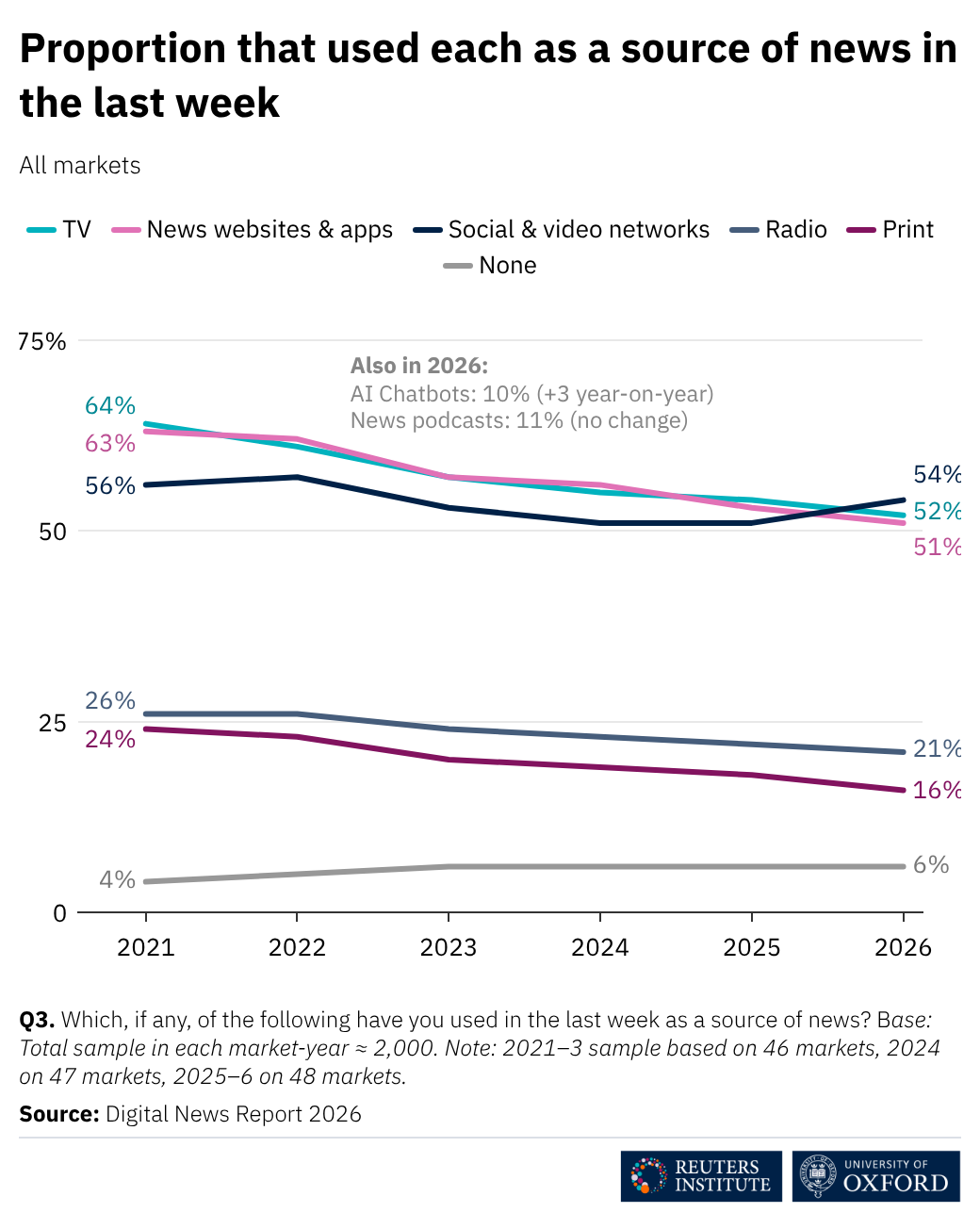
In parallel, the formats that platforms prioritize and users engage with are growing in importance – for the first time, a majority of people now watch online news video in all 48 Digital News Report markets, and in 45 markets more people now watch online news video than watch broadcast TV news. This growth in online video consumption is all happening on third party platforms. Mainstream news organisations have on average seen video consumption on their own sites and apps go backwards, down 5pp this year.
The news – broadly defined, and necessarily in the eye of the beholder – that people get via platforms is from many different sources, including often, but far from always, news media organizations. Around a quarter (27%) of respondents globally get some news from news-focused individual creators or influencers, and almost half (46%) get some news from creators of any type. This, importantly, does not necessarily happen at the expense of news media organizations. In fact, those who access creators consume more traditional media than the average respondent.
All this, and much, much, more, in the full report, by lead author Jim Egan, Craig T. Robertson, Amy Ross Arguedas, Nic Newman, myself, Mitali Mukherjee, and Richard Fletcher.
 rasmuskleisnielsen.net