Tag Archives: social-media

2025 Digital News Report out

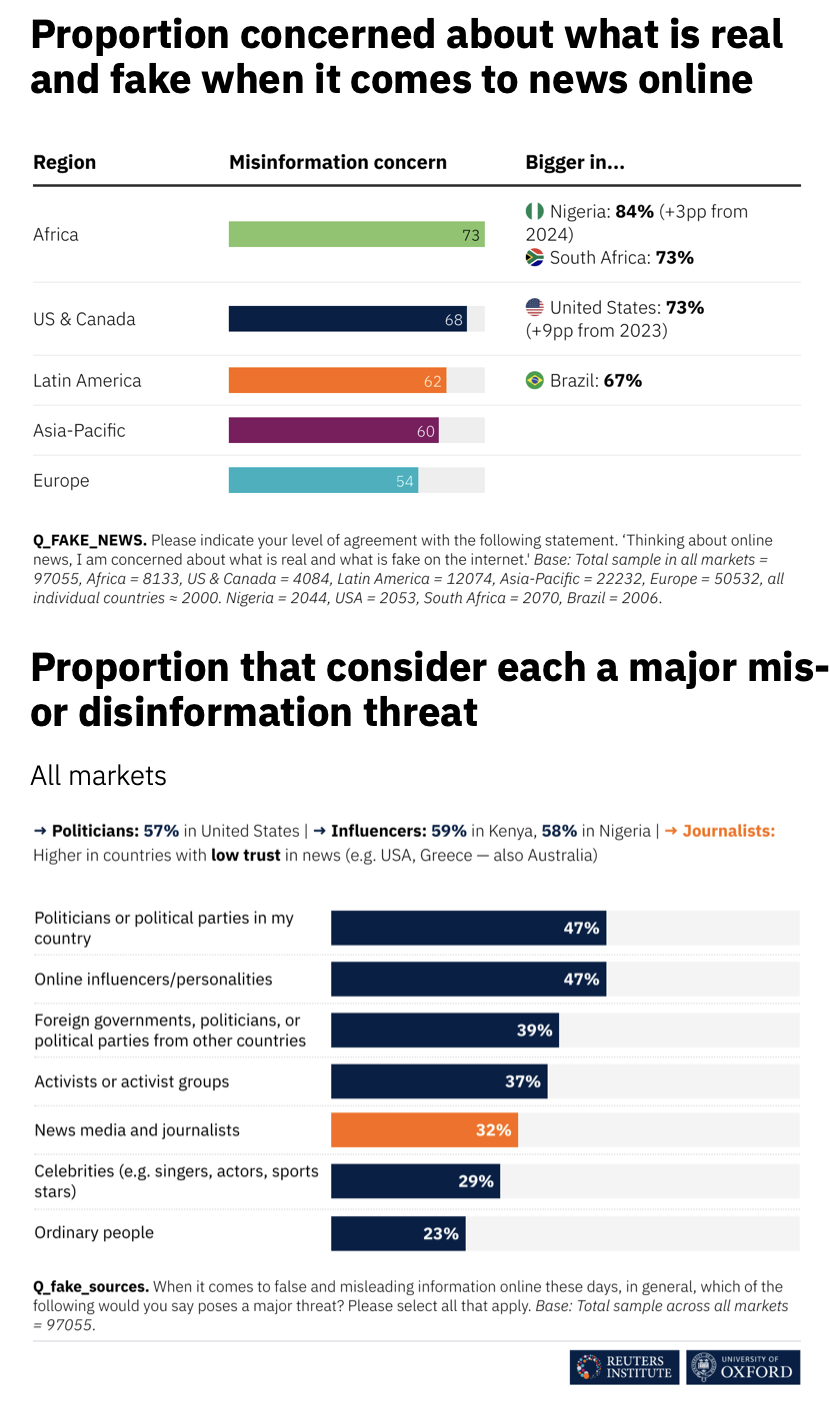
“Alternative media voices often have a wide reach and appeal to audiences that news publishers have been keen to engage with but the report also shows that, when it comes to underlying sources of false or misleading information, online influencers and personalities are seen as the biggest threat worldwide along with national politicians”, Mitali Mukherjee writes in her introduction to the 2025 Digital News Report.

There are countries where news media still have a strong connection with much of the public, and where publishers have adapted well to a challenging digital media environment (including my native Denmark), but overall the report is a sobering read for the news media. As lead author Nic Newman writes: “In most countries we find traditional news media struggling to connect with much of the public, with declining engagement, low trust, and stagnating digital subscriptions.”

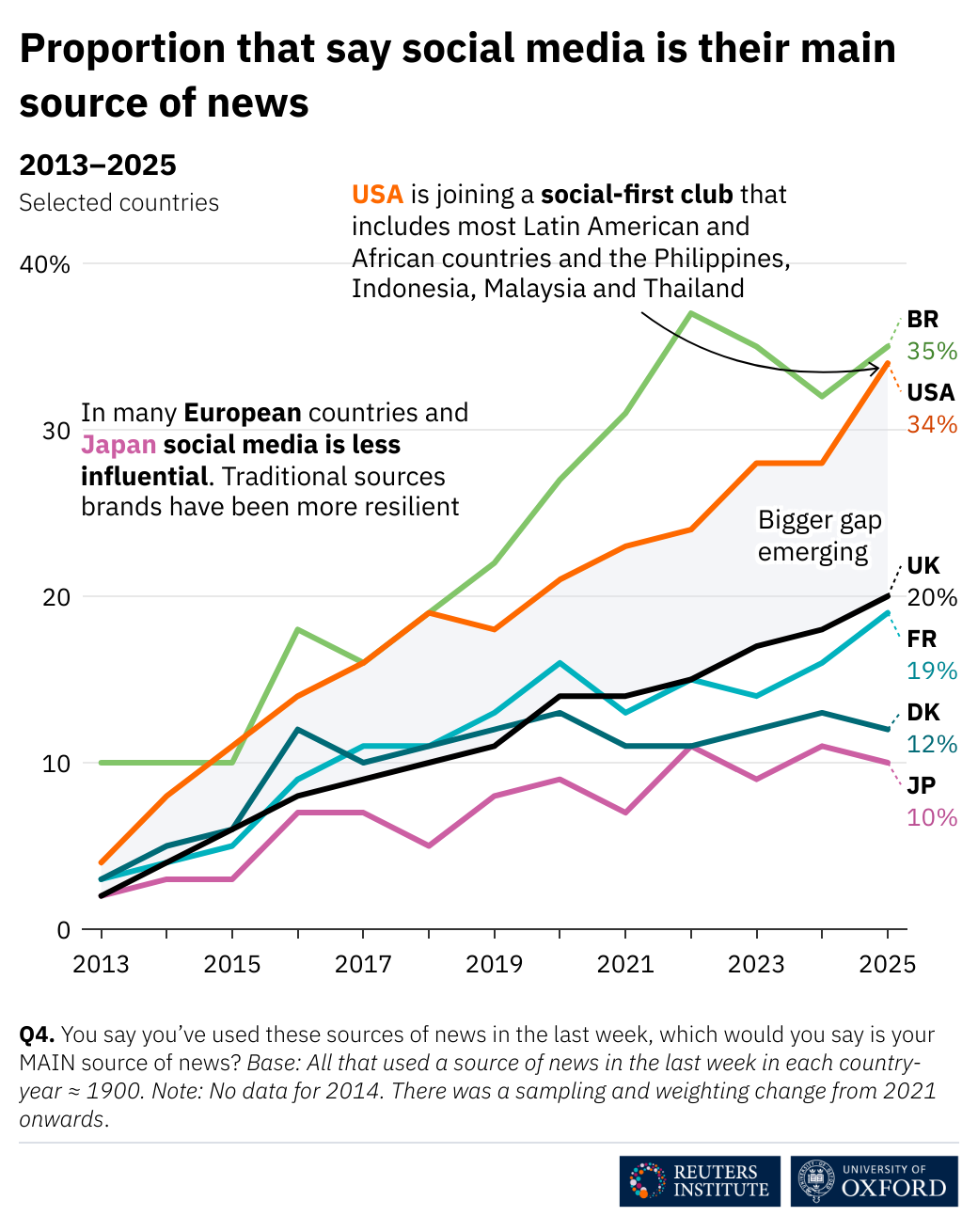
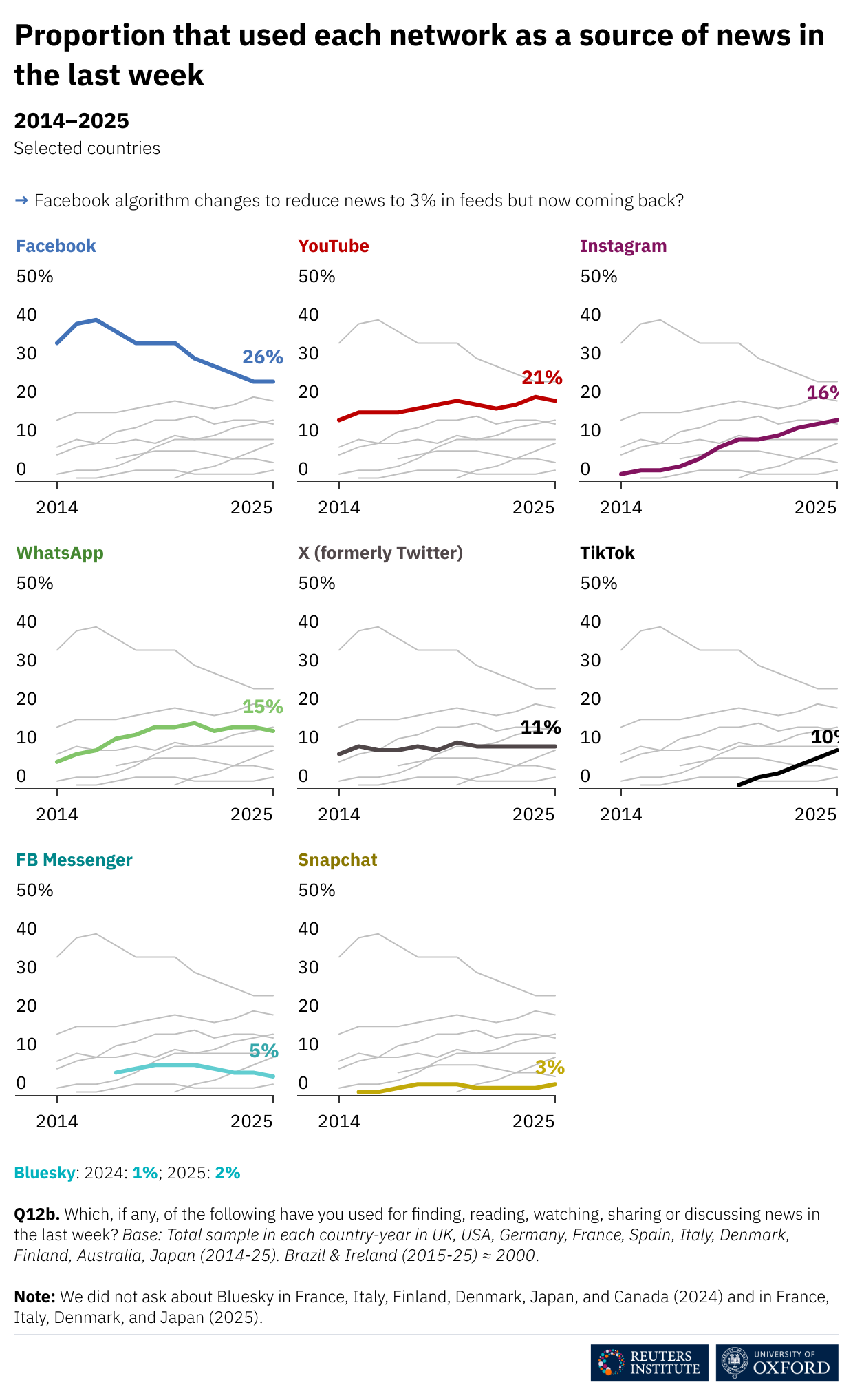
In the report, we document how platforms are increasingly central to how many find and access all sorts of content, including news, as well as a continued fragmentation of the platform space. There are now six networks with weekly news reach of 10% or more compared with just two a decade ago. Instagram, WhatApp, and TikTok in particular have grown in importance, whereas BlueSky still only has tiny reach amount our respondents.
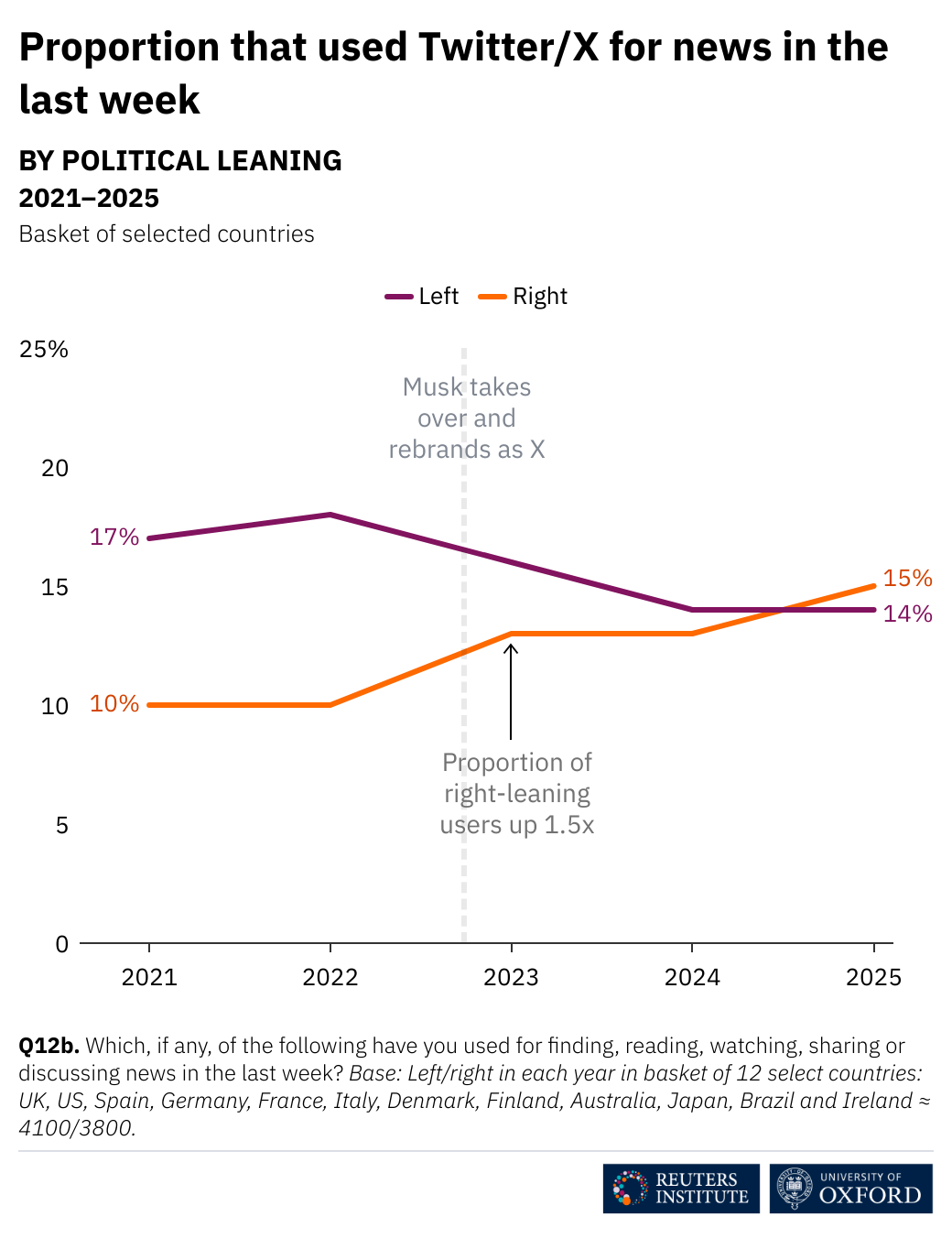
While industry data suggests X is much diminished in terms of how intensely it is used, survey data on weekly use – perhaps surprisingly – suggests stable reach overall. A liberal exodus seems to have been matched by a growing number of right-wing users, and after many years of having a predominantly left-wing user base, X now has slightly more right-wing users.
In this increasingly distributed and platform-dominated environment, large parts of the public continue to be concerned about what is real and what is fake when it comes to online news – when asked what they are most concerned about, domestic politicians and online influencers/personalities top the list, in terms of platforms, concern is focused on Facebook and TikTok.
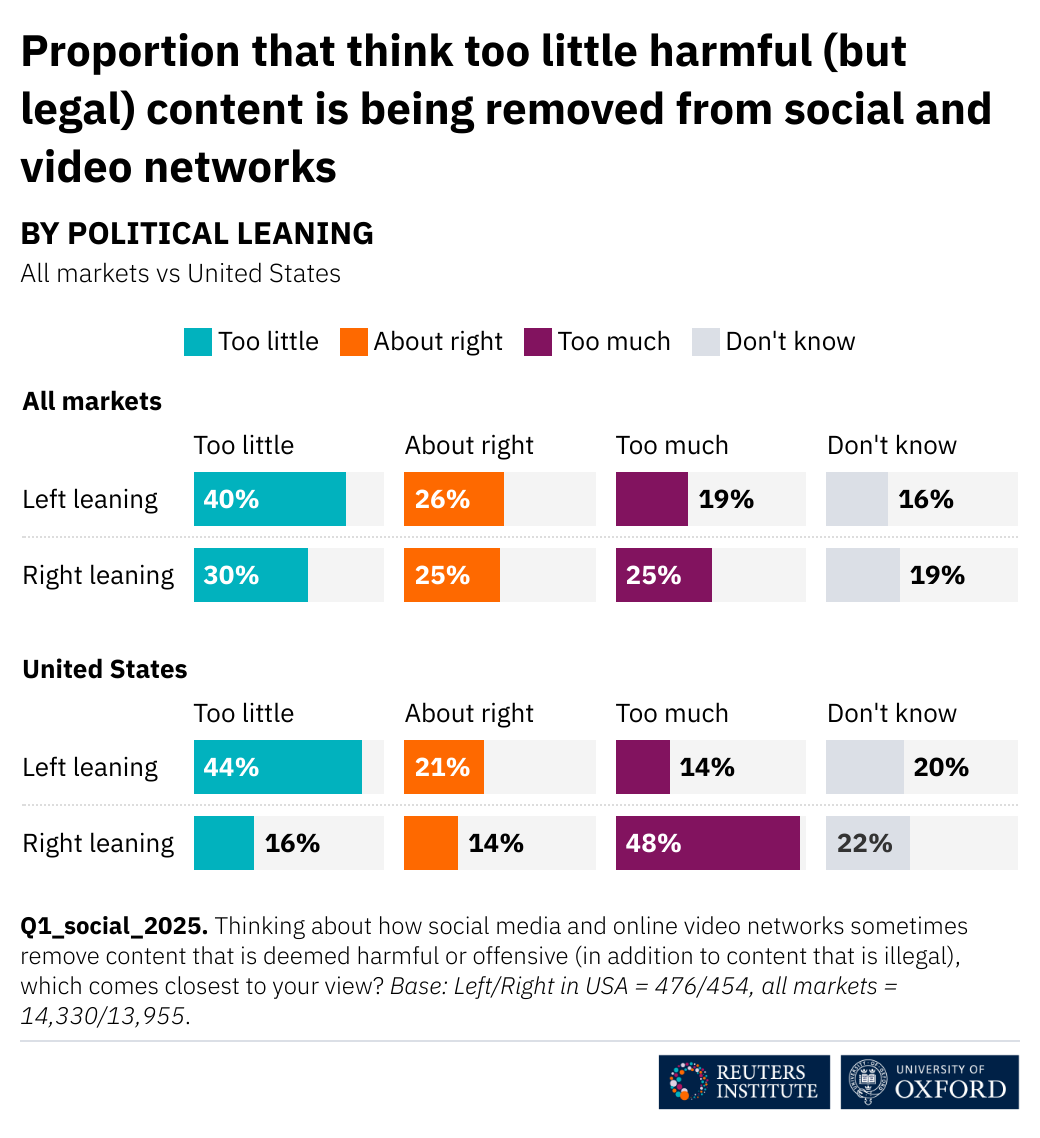
First Elon Musk and later Mark Zuckerberg has said they want to reduce how much content is subject to moderation on their platforms – while some political actors may applaud this, it is not clear the public does. A plurality in many countries say they want more harmful or offensive content removed from social media.
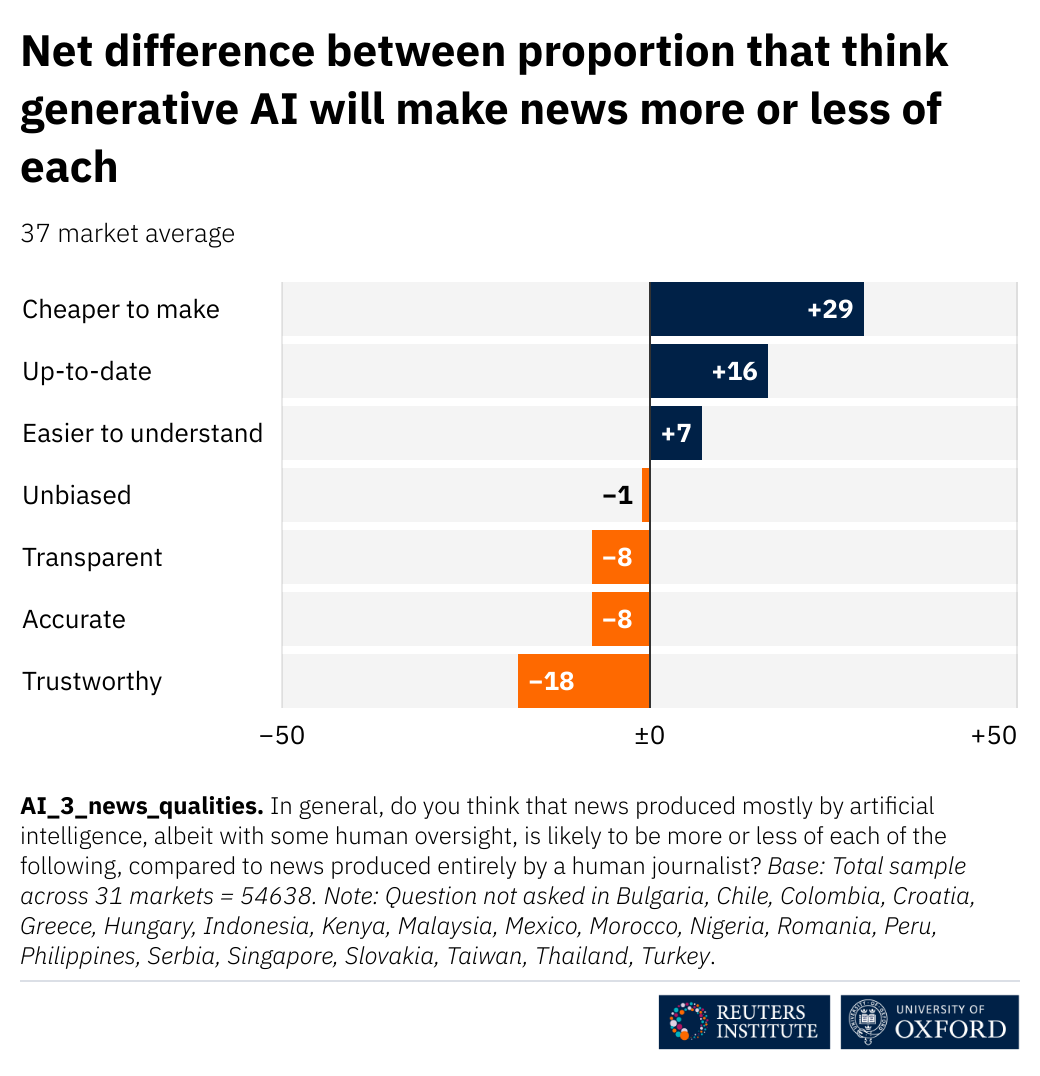
Finally, as generative AI is increasingly widely used, integrated into platforms, and adopted by many news publishers, we asked respondents what they think this will mean for news content – while there is some optimism AI-powered news will be more up to date and easier to understand, the topline is people expect it to be cheaper to make but less trustworthy.
All that and more in the 2025 Digital News Report, with topical chapters, country pages, interactive data, and more on the Reuters Institute website – an incredible team effort that I am proud to be part of.
New project: “Power over Platforms?”

I am very grateful that the Danish National Science Foundation has awarded me a DNRF Chair grant to support my new project “Power over Platforms?”.

Power over platforms?

The aim of this 3-year project is to understand how power is exercised over platform companies such as Google, Meta, and their competitors by actors who have neither raw economic nor formal regulatory or legislative means.

The focus is on how civil society groups, interest groups, professional associations, and companies from other sectors sometimes actively try to shape how platform companies operate. The starting hypotheses are that these actors (a) do this because they believe they are able to exercise at least some influence and (b) this is sometimes the case.

Systematically analyzing the actors involved in trying to influence key decisions made by different platforms on key issues—content moderation, privacy, and the use of generative AI for political information and speech—across different jurisdictions (the US and UK as major markets outside the EU, key markets inside the EU), and across different platforms (primarily consumer-facing content platforms including Google, Meta, and their smaller competitors TikTok, X, Snapchat, and Reddit) the project sets out to identify who seeks to influence platform governance, how, and what the outcomes are across countries and across companies.

The project builds on and goes beyond previous work on the “Power of Platforms” I did with Sarah Anne Ganter, and seeks to expand our scientific understanding of platform governance by analyzing a wide range of actors involved, some of whom have received limited attention from researchers. It aims to provide insights which can in turn help inform public and policy discussions about how to respond to the role that platform companies play in a range of important areas including free speech (through content moderation), privacy (data protection and encryption), and, with rapid development and deployment of generative artificial intelligence, new ways for people to exercise their fundamental right to receive and impart information and ideas.

This is an important area to research because platform companies increasingly develop and enforce principles, policies, and practices that go above and beyond what is legally required in defining what they consider acceptable behavior and content. But who, in turn, seeks to and sometimes manages to influence how the companies do this? When do they succeed? These questions are at the heart of the project.

I will be working with two postdoctoral researchers on the project (interested in these posts? Details here – apply by December 13) and various international collaborators.

I am grateful to the Danish National Research Foundation for deciding to fund the project, and to everyone in the Department of Communication and at the University of Copenhagen more broadly who have supported me and helped with the application process.