
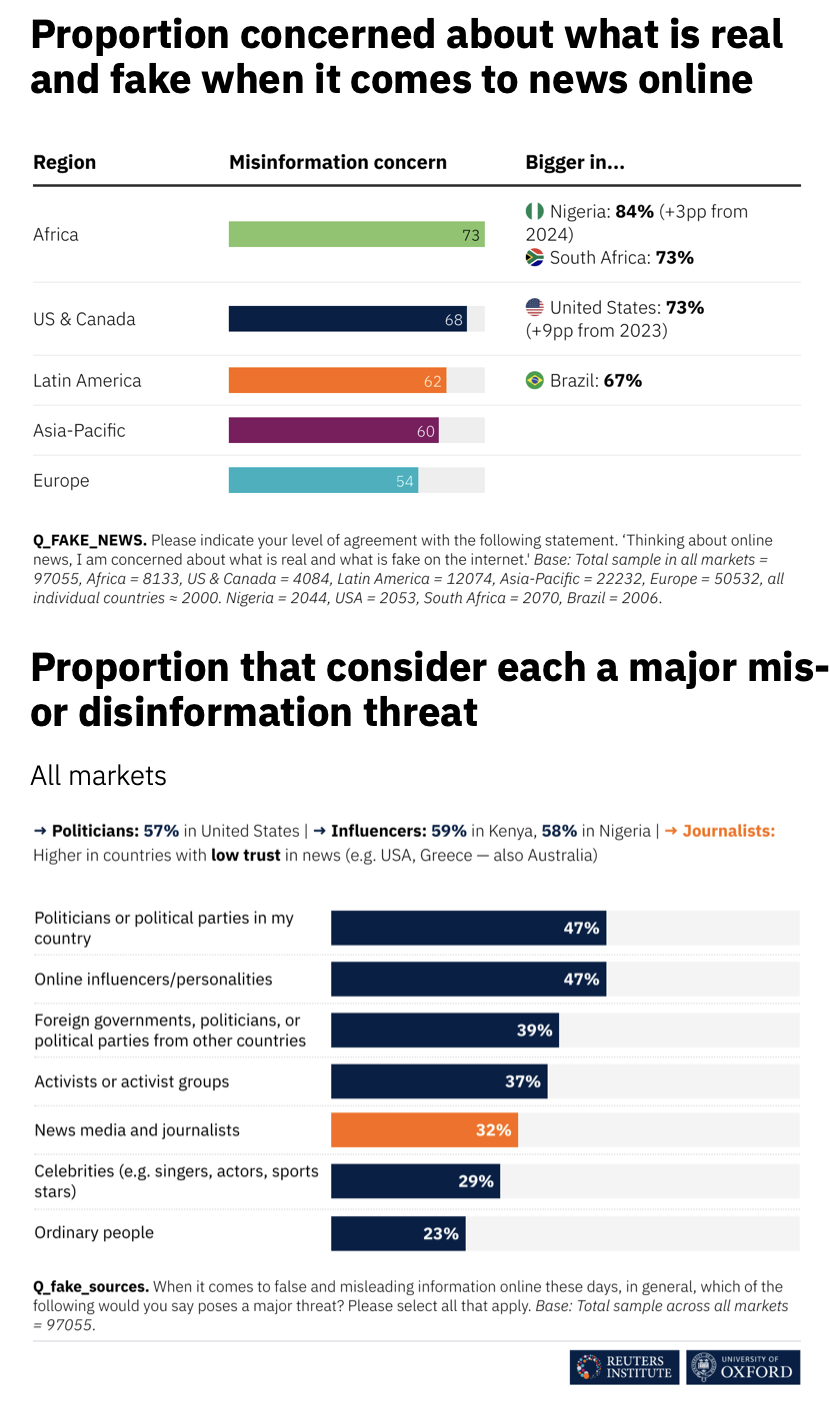
“Alternative media voices often have a wide reach and appeal to audiences that news publishers have been keen to engage with but the report also shows that, when it comes to underlying sources of false or misleading information, online influencers and personalities are seen as the biggest threat worldwide along with national politicians”, Mitali Mukherjee writes in her introduction to the 2025 Digital News Report.
There are countries where news media still have a strong connection with much of the public, and where publishers have adapted well to a challenging digital media environment (including my native Denmark), but overall the report is a sobering read for the news media. As lead author Nic Newman writes: “In most countries we find traditional news media struggling to connect with much of the public, with declining engagement, low trust, and stagnating digital subscriptions.”

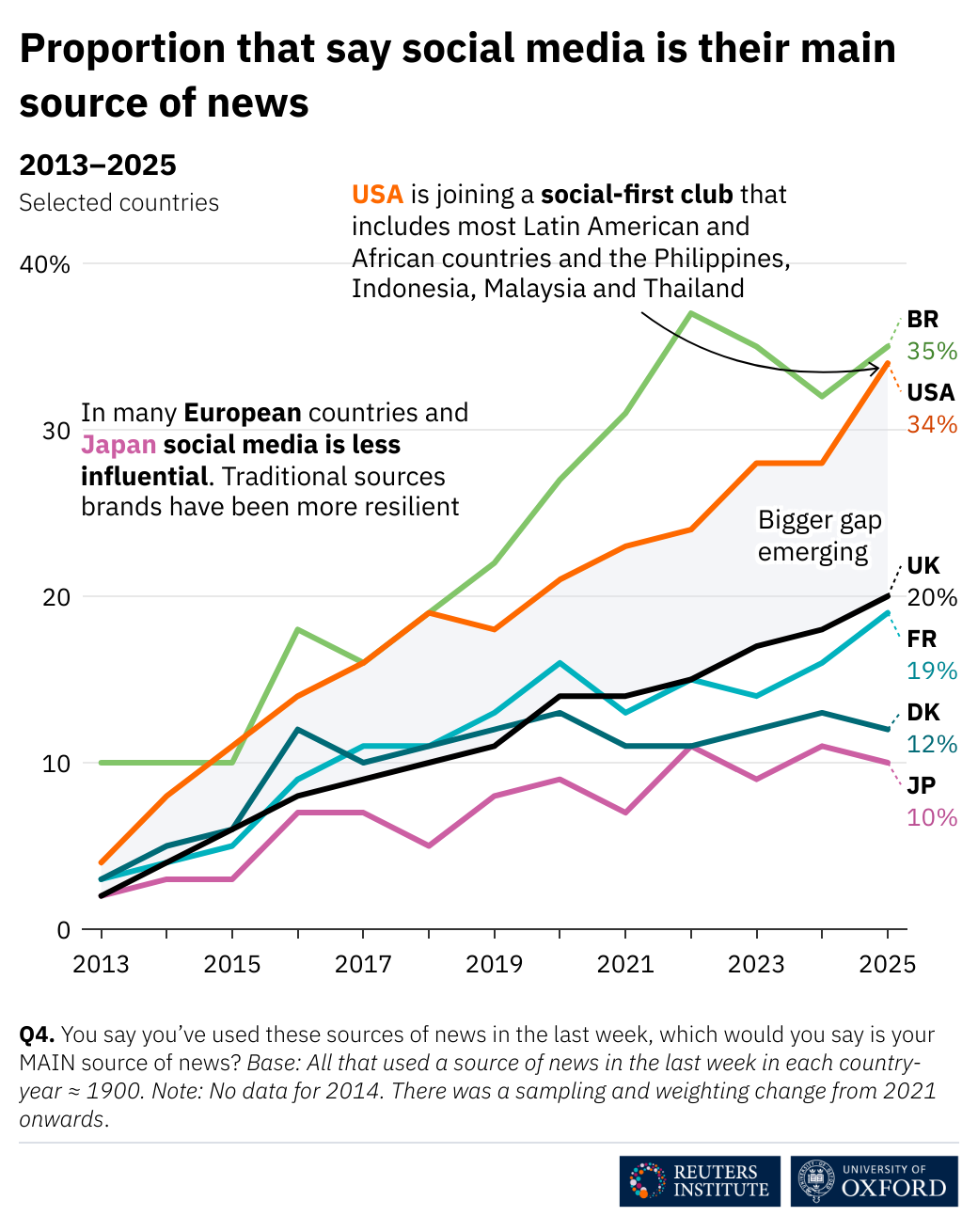
In the report, we document how platforms are increasingly central to how many find and access all sorts of content, including news, as well as a continued fragmentation of the platform space. There are now six networks with weekly news reach of 10% or more compared with just two a decade ago. Instagram, WhatApp, and TikTok in particular have grown in importance, whereas BlueSky still only has tiny reach amount our respondents.
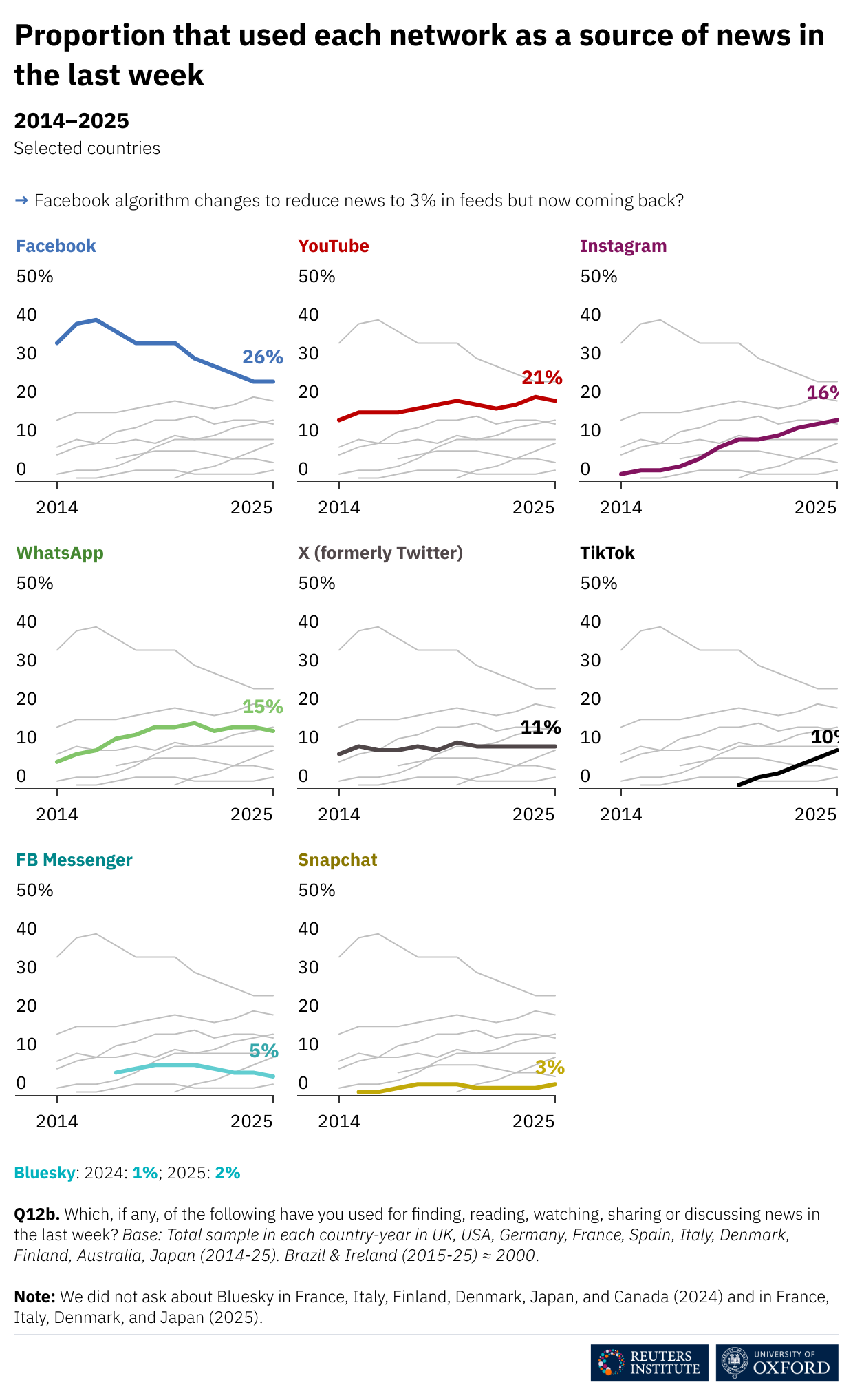
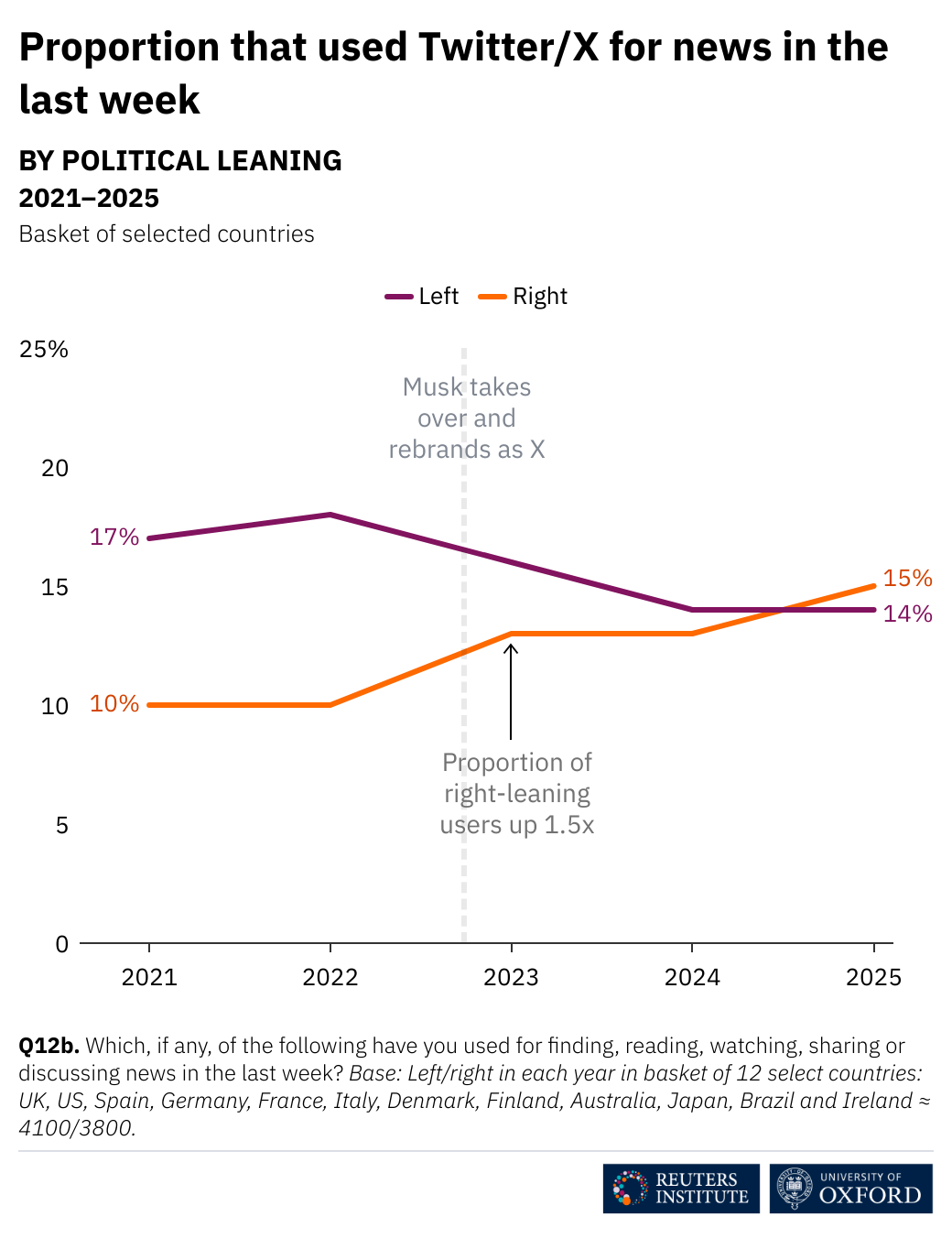
While industry data suggests X is much diminished in terms of how intensely it is used, survey data on weekly use – perhaps surprisingly – suggests stable reach overall. A liberal exodus seems to have been matched by a growing number of right-wing users, and after many years of having a predominantly left-wing user base, X now has slightly more right-wing users.
In this increasingly distributed and platform-dominated environment, large parts of the public continue to be concerned about what is real and what is fake when it comes to online news – when asked what they are most concerned about, domestic politicians and online influencers/personalities top the list, in terms of platforms, concern is focused on Facebook and TikTok.
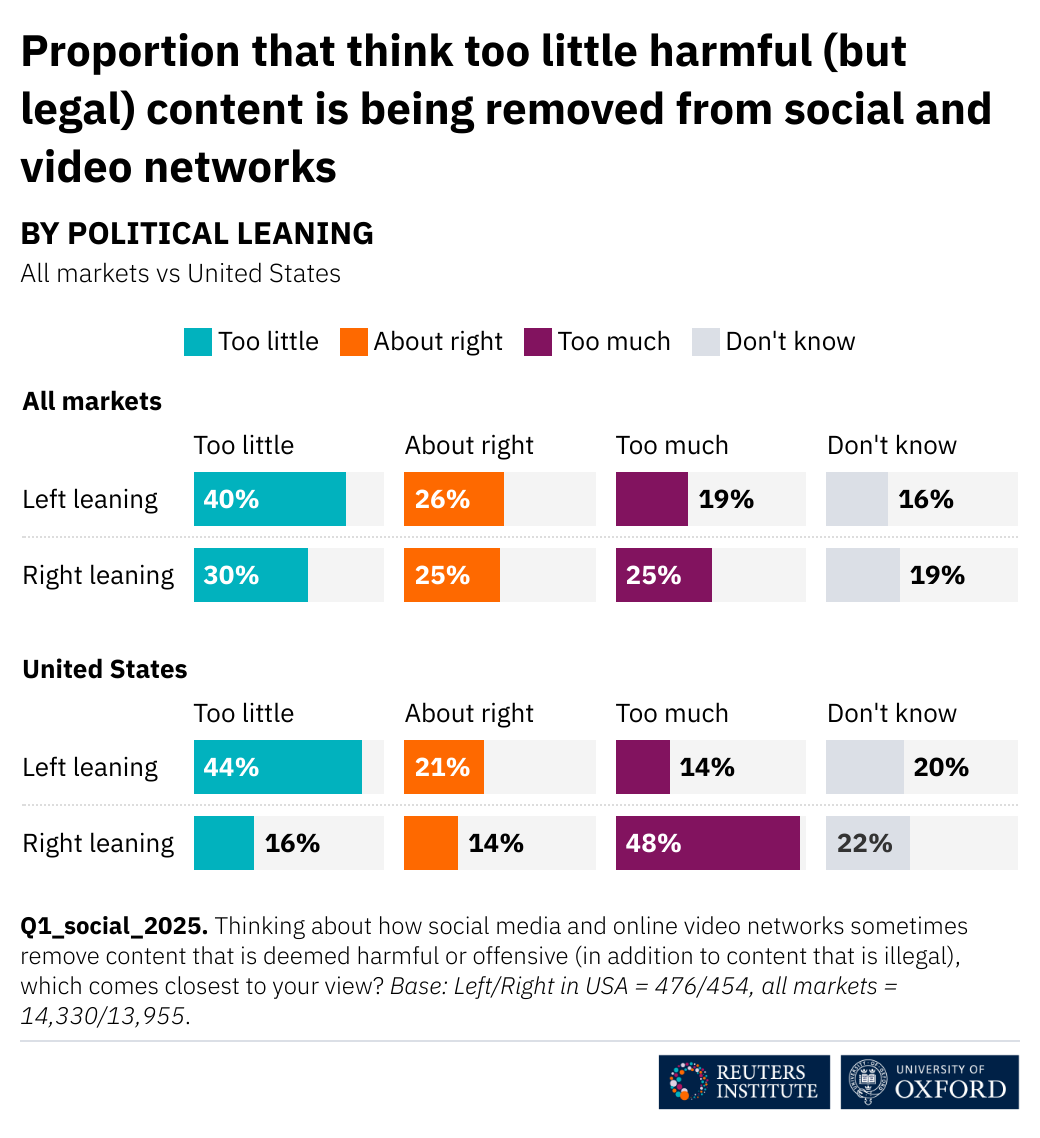
First Elon Musk and later Mark Zuckerberg has said they want to reduce how much content is subject to moderation on their platforms – while some political actors may applaud this, it is not clear the public does. A plurality in many countries say they want more harmful or offensive content removed from social media.
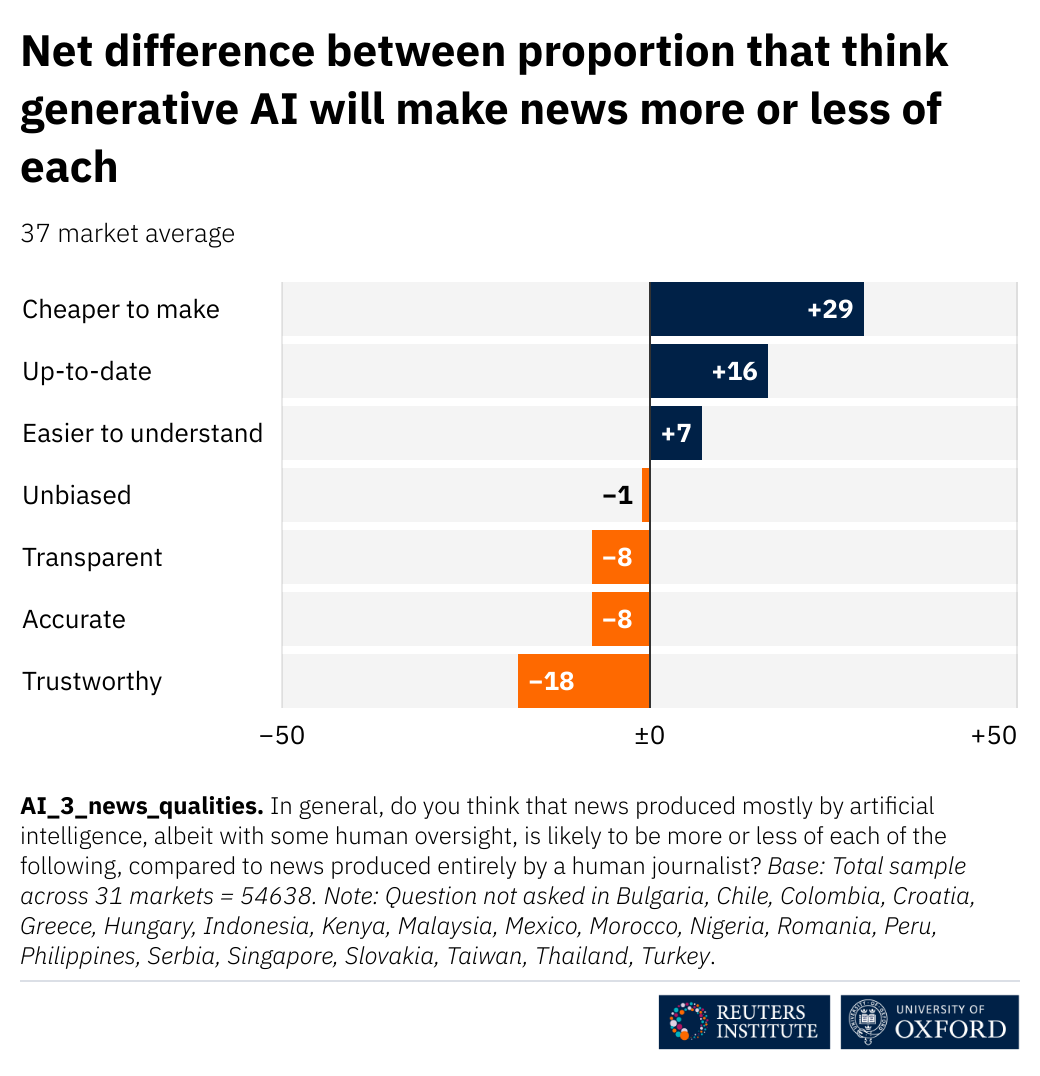
Finally, as generative AI is increasingly widely used, integrated into platforms, and adopted by many news publishers, we asked respondents what they think this will mean for news content – while there is some optimism AI-powered news will be more up to date and easier to understand, the topline is people expect it to be cheaper to make but less trustworthy.
All that and more in the 2025 Digital News Report, with topical chapters, country pages, interactive data, and more on the Reuters Institute website – an incredible team effort that I am proud to be part of.
 rasmuskleisnielsen.net