
The 2024 Reuters Institute Digital News Report is out, documenting scale and scope of ‘platform resets’ and much more. It is a team effort by lead author Nic Newman, Richard Fletcher, Craig Robertson, Amy Ross, and myself, working with our country partners. The report covers 47 market accounting for more than half of the world’s population, and is made possible by our 19 funders. A real pleasure to chair the panel discussion at the global launch at Reuters News this morning, featuring Rozina Breen (editor-in-chief, The Bureau of Investigative Journalism), Anna Bateson (CEO of the Guardian Media Group), Rachel Corp (CEO of ITN), and Matthew Keen (Head of Operations and Strategy, Reuters).

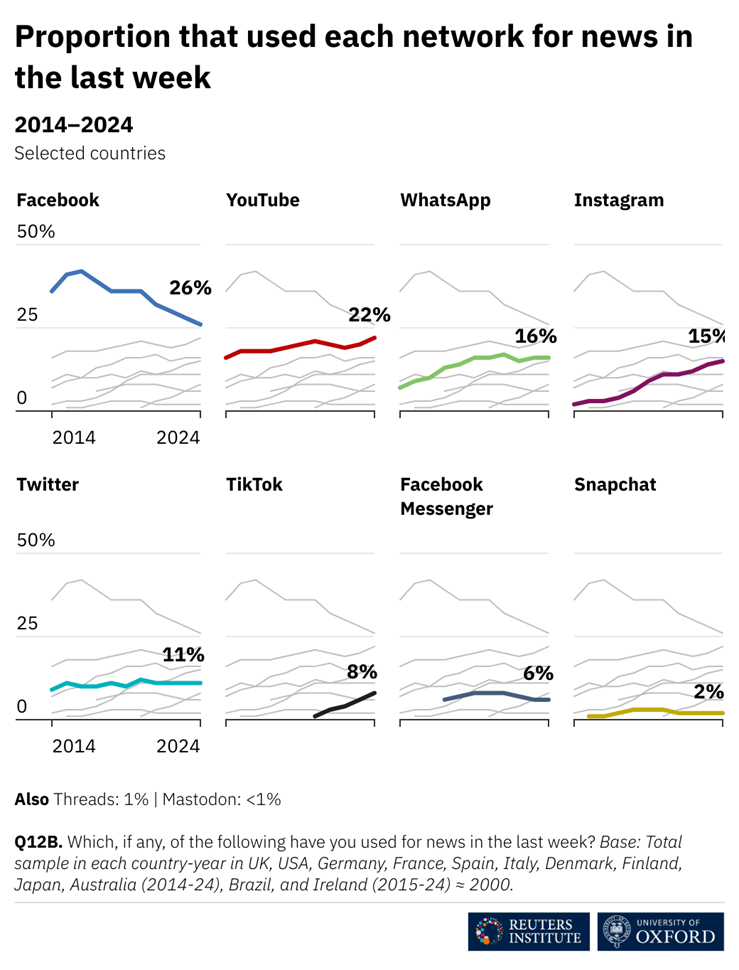
A key theme this year is how a series of ‘platform resets’ are shaping how people access news and changing the environment publishers operate in – even as the percentage who say they get news via Facebook continues to decline, a range of other social, video, and messaging platforms are growing in importance for discovery, many focused on on-site video, visuals, and more private experiences.
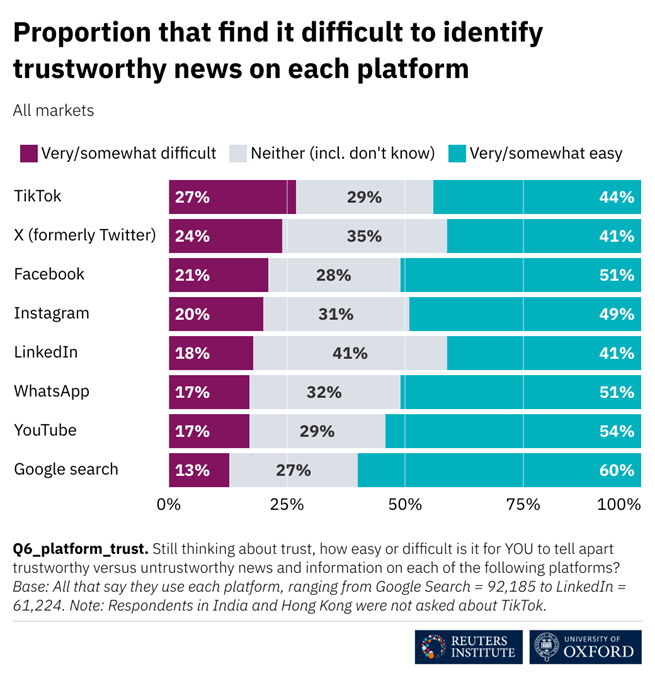
Generally, many of our respondents say they find it at least somewhat easy to tell trustworthy and untrustworthy news and information apart on various platforms, but there are real differences, with more people concerned about how to navigate information on e.g. TikTok, X, Facebook.
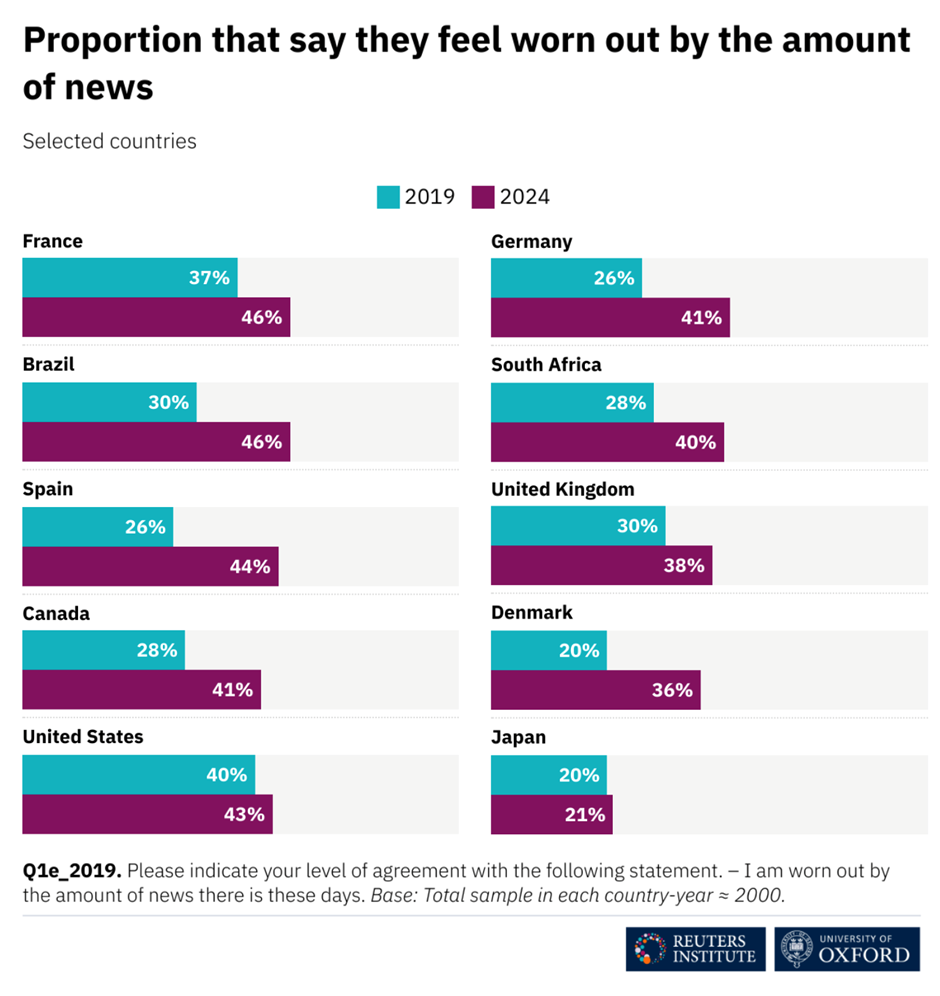
We also document the continually fraying connection between much of the public and much of the news media industry. In many markets, trust is limited, interest in news declining, and news avoidance growing. Many of our respondents say they are worn out by the amount of news, up sharply since we last asked this question in 2019.
We know many publishers care deeply about trust in news, and in a more challenging media environment where much of the public, in many cases especially less privileged people, do not trust the news, publishers able to earn and maintain trust may be able to stand out.
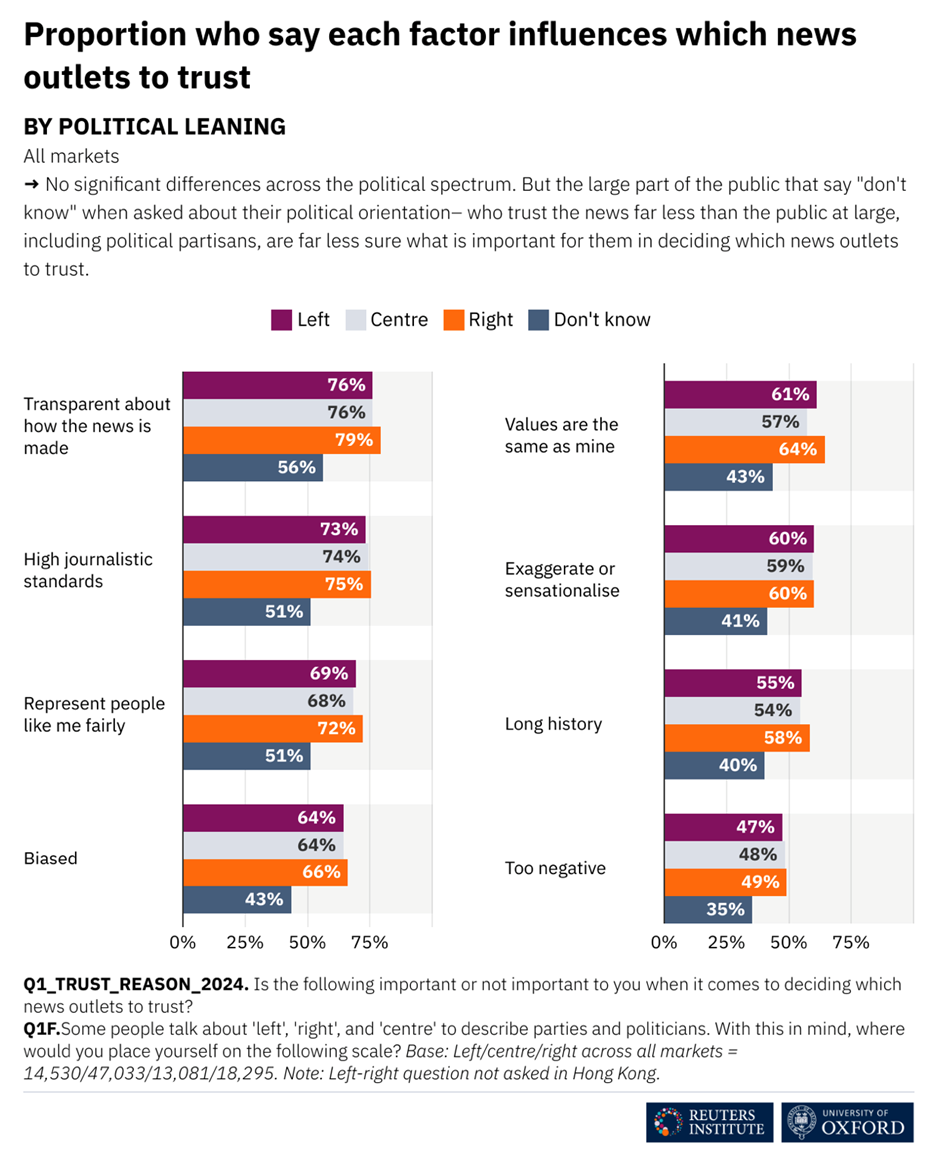
In terms of what factors are important when deciding which news outlets to trust, we show that while people come to different conclusions RE individual brands, across the political spectrum from left to right, most actually emphasize the same factors. The main difference here is not by political orientation but what political scientists call “the other divide” – the large group of people who are more distant from conventional politics (and often less privileged in terms of income and education) are less sure what, if anything, would lead them to trust a news outlet.
That and much more in the full report, which is freely available here.
 rasmuskleisnielsen.net