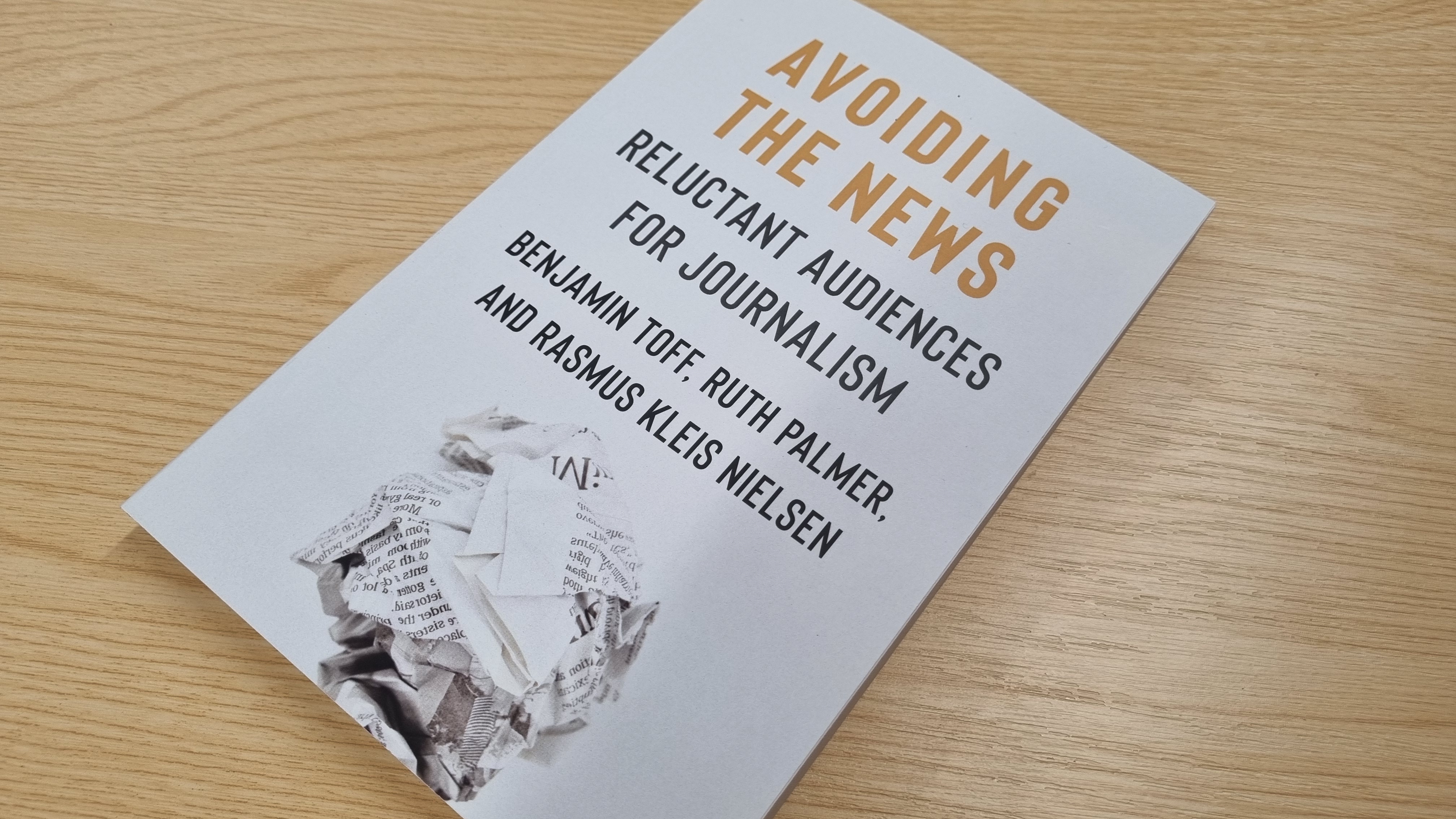
Wrapping up the year grateful for how people have engaged with “Avoiding the News”, the book Ben Toff, Ruthie Palmer, and I published at the beginning of the year. Sharing it with the world has, as we hoped it would be, been the beginning of a wider conversation, not the final word.
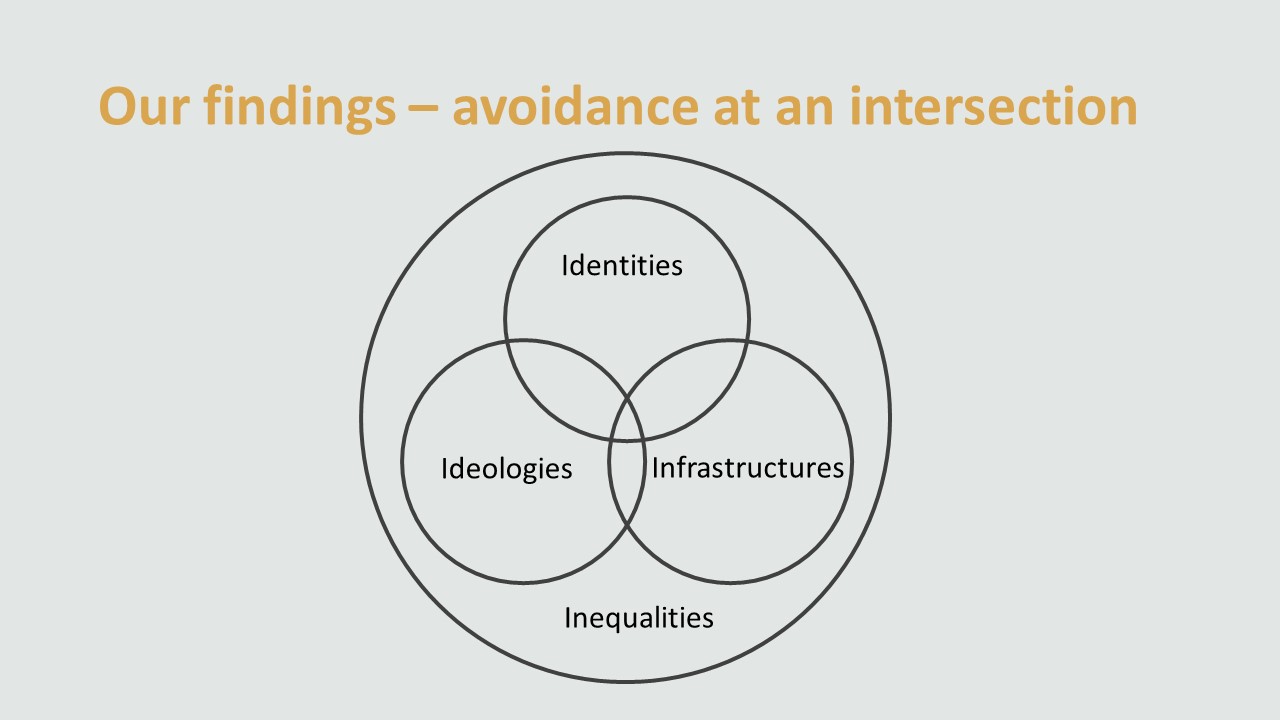
In the book, we draw on hundreds of interviews as well as survey data to show that news avoidance is not “just” a response to the content on offer in the news. but also fundamentally shaped by who we are, what we believe, and the tools we rely on. It happens at the intersection between identity, ideology, and infrastructures, and tends to compound existing inequalities.
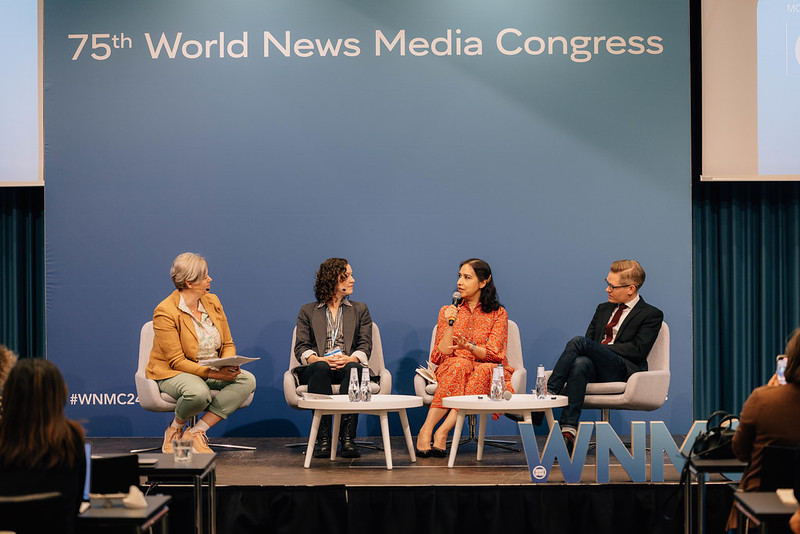
Ruthie Palmer and I on stage at the World News Media Congress, discussing the book with Amalie Kestler and Shazia Majid.
We have had numerous conversations with journalists and editors concerned about the fraying connection between much of the news and much of the public, a chance to discuss the book with participants at the International Journalism Festival, with experienced journalists and editors at the World News Media Congress, and seen reporters from the New York Times, the Washington Post, and elsewhere engage with the work. There also continues to be a vibrant community of academics researching the phenomenon in various ways, some of them contributing to a special issue of Journalism Studies on the topic.
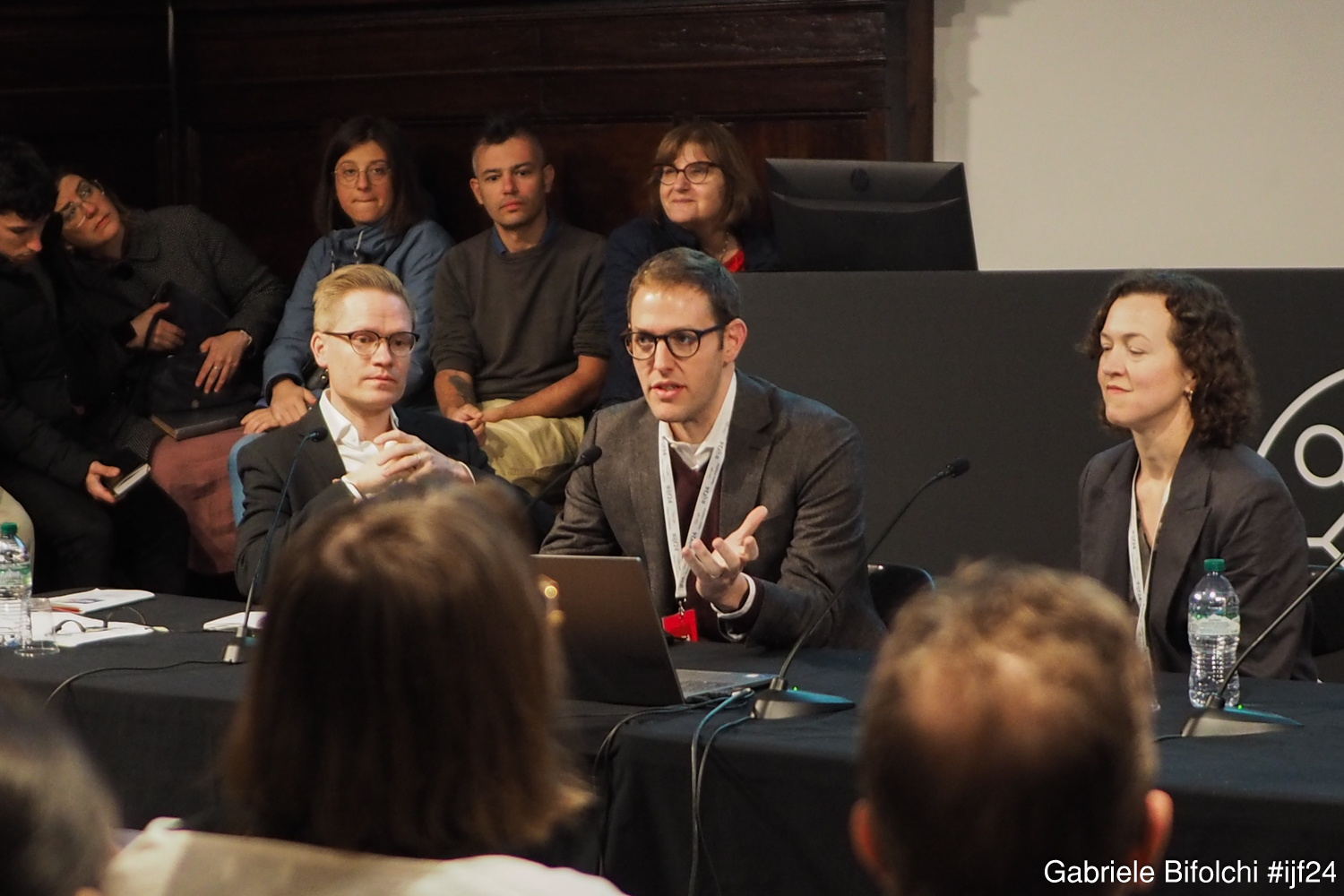
Ben Toff presenting during our panel session at the International Journalism Festival.
The book has also been named a Choice Outstanding Academic Title, an award given by the American Library Association’s Choice Reviews to “outstanding works for their excellence in presentation and scholarship, the significance of their contribution to the field, their originality and value as an essential treatment of their subject”.
We hope journalists and those who care about journalism will continue to engage with the analysis we present and the issues we identify.
If you are curious about the book, you can read an excerpt here where we identify the groups more likely to be consistent news avoiders, if you are interested in our thoughts on how journalists could respond, we discuss some options here.
The book is available here from the publisher, Columbia University Press, with a 20% discount using the code CUP20SM.
* The problem is not the public – people are interested in the world around them, they use media to explore it, make sense of it, and navigate it, and engage with content and information they find useful and relevant.
* Transitions are hard for news media, but also demonstrably possible – leaders from a range of very, very different kinds of publishers were very clear they think believe much of the current industry is at best in managed decline, but also that they see a range of sustainable paths forward for the business of news.
* Part of that is the useful discipline of having to reach your audience – several participants spoke in different ways about how the shift from direct discovery through channels dominated by news publishers to distributed discovery through platforms while in many ways very challenging has also forced a new, healthy, humility on journalism and the news media by making clear they can never take the public and people’s attention for granted.
All contributions are confidential but under the Ditchley rules we can draw on the substance of it as long as we do not disclose who said what – I was glad that this year’s discussions were much more respectful of the public and more cautiously optimistic about the future of (parts of) the news industry than many such discussions I have been part of over the years.
I am very grateful that the Danish National Science Foundation has awarded me a DNRF Chair grant to support my new project “Power over Platforms?”.
Power over platforms?
The aim of this 3-year project is to understand how power is exercised over platform companies such as Google, Meta, and their competitors by actors who have neither raw economic nor formal regulatory or legislative means.
The focus is on how civil society groups, interest groups, professional associations, and companies from other sectors sometimes actively try to shape how platform companies operate. The starting hypotheses are that these actors (a) do this because they believe they are able to exercise at least some influence and (b) this is sometimes the case.
Systematically analyzing the actors involved in trying to influence key decisions made by different platforms on key issues—content moderation, privacy, and the use of generative AI for political information and speech—across different jurisdictions (the US and UK as major markets outside the EU, key markets inside the EU), and across different platforms (primarily consumer-facing content platforms including Google, Meta, and their smaller competitors TikTok, X, Snapchat, and Reddit) the project sets out to identify who seeks to influence platform governance, how, and what the outcomes are across countries and across companies.
The project builds on and goes beyond previous work on the “Power of Platforms” I did with Sarah Anne Ganter, and seeks to expand our scientific understanding of platform governance by analyzing a wide range of actors involved, some of whom have received limited attention from researchers. It aims to provide insights which can in turn help inform public and policy discussions about how to respond to the role that platform companies play in a range of important areas including free speech (through content moderation), privacy (data protection and encryption), and, with rapid development and deployment of generative artificial intelligence, new ways for people to exercise their fundamental right to receive and impart information and ideas.
This is an important area to research because platform companies increasingly develop and enforce principles, policies, and practices that go above and beyond what is legally required in defining what they consider acceptable behavior and content. But who, in turn, seeks to and sometimes manages to influence how the companies do this? When do they succeed? These questions are at the heart of the project.
I will be working with two postdoctoral researchers on the project (interested in these posts? Details here – apply by December 13) and various international collaborators.
I’m going to tell you a story about what’s happening to journalism and news media across the world. There are a lot of variations, differences between countries and organizations and communities being served. But I still think there are some big themes that we can recognize that are worth going out to recognize where we come from, where we are, and where we might go in the future.
Where we come from
So if we start with where we come from, journalism has a lot to be proud of. At its best, it’s an occupation that is committed to seeking truth and reporting. it. It provides a way of telling people stories that can make them understand other people’s experiences, but also sometimes their own experiences in a new light. It can portray the contending forces in the world so that people can relate to some of the titanic forces at play beyond our own immediate circles.
And at its best, it both aims and sometimes is in fact able to help people understand the world beyond personal experience and make the invisible world visible in a way that is profoundly empowering.
One of the reasons I do what I do is that I’ve seen so powerfully in my own family of people who in the past had little access to formal education and few of the structural privileges that we associate with bourgeois citizenship, how profoundly important journalism was in enabling them to connect with the world beyond personal experience and be active participants and shape and reshape that society in line with their own ideals and their own interests.
And there is something special about journalism that’s not unique in trying to help individuals be citizens, but often would aspire to do so in a way that is independent of the powers who actively try to reshape society in particular directions.
Whether you think of that independence in terms of an ambition to be impartial, or whether you think of that independence as being upfront and clear about your point of view or your editorial line, what those different conceptions have in common, I think, is at least a commitment to not do it on behalf of some other organized interest or force in society. This is how journalism can retain its autonomy of the many other forces at play.
This wild and varied set of aspirations gives us a way of thinking about what many journalists would like to achieve. It also gives us yardsticks by which we might judge ourselves when we fall short. Nothing is perfect, and the history of journalism is certainly not perfect either.
I think it’s also important to recognize that these are things that much of the public would like to have from journalism.
This is one of the most powerful themes in years of research that we have done at the Reuters Institute on people’s relationship with the news – much of the public has what might come across as surprisingly conventional, or in a nicer term, classical, expectations of what they would like to have from journalism.
They would like journalism to provide a way to stay up to date with what’s going on in society. They would like journalism to help them understand things that they are not themselves familiar with. They would like journalism to convey the range of different perspectives on some of the issues that we face as societies. These are aspirations that journalists have, and they are things that much of the public would like to have from journalism.
And over the years, of course, professional practice and the occupation of journalism grew up in part in pursuit of these aspirations, and in part grew up inside of media organizations and businesses that made money off of investing in this professional practice. At the dawn of the century in Berlin alone, there were well over a hundred different newspapers.
This is a very different world from the one we live in today. If we move from the profession to the business that employed these journalists, and that many of these journalists were themselves active in – we have to remember that many of the pioneers of journalism, the great reporters and editors of the 19th century and early 20th century were entrepreneurs. They were interested, yes, in the editorial side. But they were also interested in the business side that enabled editorial autonomy from the state, from political parties, from organized interests, and from other businesses.
The environment in which they thrived was an environment that, from the point of view of people such as my family – members of the public – was one where citizens had a low choice media environment, not that many ways in which they could access information about the world beyond personal experience.
As a consequence of that, those who controlled the printing presses had high market power, high market power over the public and high market power over advertisers. And this in turn produced a, in many countries, very lucrative business. Profit margins in the double digits and a sort of a veneer of stability and success that we associated with newspaper companies in particular, till relatively recently.
It is also, I think, obvious to everyone in the room that this is not the world we live in anymore. And it hasn’t been for quite a long time. But I think it’s important to start with that world because it’s so profoundly still shaped the profession of journalism and the media organizations that employ journalists. Many of them are still at least in part oriented towards the world of yesterday even as they have to navigate the world of today and tomorrow.
Where we are
So what is the world in which we live today? I mean in the simplest sense you might start with the relationship between the public and journalism and just recognize that if the world of my grandparents and parents was a world of low choice for the public, high market power for publishers, the world of today is a world of high choice for the public and low market power for publishers.
This means that the business of news is far less lucrative than it was in the past and it means that the unearned confidence that journalism had in a world in which, essentially, journalists wrote and people like my family read, has been blown out of the water because now everyone can raise their voice and many of them do that – including very critically and in ways that contend and sometimes outright attack or harass journalists.
We need to be very, very clear about where journalism sits in this fundamentally transformed media environment.
Because it is not the case that people have turned their back on the ways in which media can help you imagine a richer and more varied life than what you live yourself. In fact, people spend more time and in many cases more money on media than they did in the past.
What is the case is that the role of journalism in this more varied and from the point of view of much of the public, frankly richer and better media environment has shrunk.
We really need to be clear-eyed that every day the public is voting with its attention and with its wallet, and they are not voting for conventional forms of journalism.
The shift from the old world to the new world is not about people not having access to printed newspapers or linear scheduled broadcast channels or linear scheduled radio channels.
It is about them not choosing them when they have found things they find more satisfying and rewarding and valuable to them.
This shift has been incredibly disruptive for the business of news that journalists were employed by, even as a profession sort of drifted away from seeking to assume responsibility for the business that made journalism possible.
And the shift is actually even more challenging than just the financial crisis. Because there’s also a loss of cultural prominence in our societies that we can see in so many ways in audience research.
Every day the public is telling us things and it is up to us what we make of them and whether we want to convince them to see the world differently or whether we want to respond to what they’re telling us.
What are they telling us even as the old business of news is busy dying? Well, we see expressed levels of interest in news is in decline in much of the world. That trust in news is in decline in much of the world. That levels of active news avoidance is on the rise in many parts of the world.
And essentially, if I want to be really pointed about it, a significant and even growing part of the public, particularly younger people, people with lower levels of income, lower levels of formal education, historically poorly served minorities, in many cases women as well, are expressing in our more qualitative research – interviews, focus groups and the like – that they find that journalism irrelevant, depressing, and incomprehensible.
The public is essentially telling us every day and in growing numbers that even though they often want what journalism aspires to provide, they’re not feeling that we’re delivering it in a way that makes it worth their while to engage with us.
Think about what this means – there is a lot of concern in the industry about how can we convince people to pay for news. As a sort of a way of overcoming some of the business challenges that are consequences of these great structural transformations that I have very briefly outlined.
But in a sense, the problem is much more fundamental than convincing people to pay. The problem is that publishers are struggling to convince people to pay attention to news. And that, I would say, logically is a precondition of them before they would want to pay.
This is very clearly a crisis. It’s a crisis for the organizations that employ journalists, yes, that is a concern for their shareholders and owners. But it is also a concern for the profession of journalism, people being laid off, and many companies are really struggling to find better ways forward than just managing decline.
And it is a very real crisis for the profession, as I said, in a more profound cultural sense, of this fraying sense of public connection.
The idea that much of the public does not see journalism as providing the public value that journalism would say it is premised on providing. We may disagree with that judgment. Then there is a persuasion challenge. We may also feel that sometimes people have a sense of what they want, what they need. In those cases, I think we have a product problem.
Because we need to recognize, again, that it is a crisis for journalism and a crisis for the news industry but it’s not at all obvious that it is a crisis from the point of view of the public.
This year in the annual Reuters Institute Digital News Report when we surveyed people in 47 markets across the world, amongst the many questions we ask people was how well they felt that their different information needs were being met. You might think in a world in which many of those of us who care about journalism and the news industry increasingly are talking about news deserts and crisis of provision of factual information and the like – all of which are very real phenomena and very concerning phenomena – that the public at large would think about these challenges in similar terms.
But this is not at all the case.
The vast majority of our respondents would say on everything we asked them about that all or most of the information they needed was available to them, irrespectively of whether they paid for news or not. To them, irrespective of whether they paid for news or not. So we don’t know what we don’t know, and sometimes we have needs that we are not aware of, or informational things we would benefit from if they were available to us, even though they are not. But I think we really need to be very clear-eyed, that from the point of view of much of the public, what is happening to journals and the news is not a crisis for them – it is a crisis for us.
Where we might go in the future
That recognition is also where the work to address the crisis needs to begin, and this is where I think we need to turn from the past and the present towards the future and where I think it’s so important to recognize just the enormity of the forces that the people who will join me on the panel have found ways to navigate.
To be slightly reductionist about it, we can stylistically suggest that there are two main ways in which the industry has reacted to this structural transformation. There is what i think of as a rearguard reaction which is essentially is the view that things worked great and the problem is that the world has changed. Then there is a different view which is more of a sort of vanguard approach, which is that essentially the view that whatever things were like in the past, the problem now is that things have changed and we haven’t.
I’m not going to dwell here on whether things really were great in the past, other than just say, that even in what in sometimes in retrospect is seen as the high point of high modern journalism, a period that may look like a golden age from the point of view of those who worked in it and those who owned and ran the companies that dominated it, I think we need to be very clear that many people were very poorly served by that kind of journalism. And that the biggest difference perhaps was that they lived in a world in which most people couldn’t really find alternative sources or raise their voices in public, and now they can. But of course, it also had incredible value, and something very real is being lost as those institutions and those professional practices unravel.
So where do we go from there? I mean, if you think of these two stylized responses, I want to be clear that this is not meant to in some absolute sense judge this. Rearguard action works for some people and some communities and there is real value in the kinds of journalism that are being done and there are still declining but real business built around providing it. So it is sensible from the point of view of those people who do that work those businesses serve those audiences and those shrinking aging and ultimately dying audiences to continue with defending what, crudely put, works for me and older versions of me, what works for the highly educated, affluent, urban, engaged, willing to pay, middle-aged or older, and often in many societies, white men.
But it doesn’t work for everybody and it doesn’t work for them in the future.
With exception of a few winners in a winner-takes-most market consolidation, this form of journalism, this business, is in inexorable one-way decline. And it doesn’t work for many of the parts of the public that are most poorly served by this existing professional practice and business.
It doesn’t work for younger audiences. It doesn’t work for precisely the kinds of people that, as I said, I’ve seen in my own family history, have benefited so much from journalism in the past. People with low levels of formal education, lower levels of income and life, for whom journalism made, in a sense, the biggest difference at its best. It doesn’t work for those parts of the public, and it doesn’t work for historically underserved communities.
What these parts of the public say they want is not something that is not journalism.
As I’ve said at the outset, our research documents again and again that much of what people say they want from journalism is very well aligned with very timeless professional aspirations to seek truth and report it to provide analysis and understanding and arrange different perspectives. The problem is not that people are not interested in these things. It is that a large part of the public does not feel that we are providing it.
So what does one do then in response? I think what some of the most impressive pioneers have done whether they work in legacy titles or in startups is that they have returned to some of the thinking of the origin of the profession, but flipped it around.
So instead of thinking about what we did then, they’ve been thinking about who we did it for. They have put the public at the center of how they think about journalism and the business of news as a form of value creation.
They recognize very clearly that journalism exists in the context of its audience, that the political importance, the social significance, but also the economic sustainability of journalism as a professional practice is premised on the relationship with the public that it serves. If we lose sight of that and ignore what people are telling us, or only super serve the ones we are currently serving really well, then it is not surprising that we are losing touch with much of the public and struggling to make our businesses work. And I think that really is where we are seeing some of the most impressive and innovative work again across sometimes legacy titles and also new startups.
I want to be slightly rude here, if i may, and say that, with the greatest respect to my U.S American friends and that great citizen republic across the ocean – I don’t think the most interesting things right now are happening in the United States of America, because I think the rearguard action there takes the form of a few super successful companies over-serving people like me and then managed decline of asset-stripped companies in much of the rest of the industry. And then really, really interesting non-profit support and initiatives, yes – but initiatives that are so closely intertwined with the unique foundation and philanthropic funding environment of the United States that really does not exist anywhere else in the world. So I really think that people elsewhere should cheer on the US Americans for what they’re doing, but not always look there for inspiration.
I think far more promising and interesting things are happening across Europe, in really difficult markets – Dennik N in Slovakia, 444 in Hungary – as well as in more privileged markets. Lea is here from Zetland in Denmark, we have colleagues from Republic in Switzerland, and we see others like MediaPart in France or El Diario in Spain.
We’re seeing really impressive things. And I think there are some commonalities, and this is where we should really hear from the people who are doing the hard work, not those of us who are sort of admiring them at a distance as we analyze what’s going on.
But I think that some of the things that are happening are really about putting the public at the center of what journalism is and what the business of news is.
It’s about connecting with people. It’s about meeting them where they are in terms of their preferences for platforms, but also culturally. It’s about centering their needs and interests rather than this rather imperial “we-publish-your-read” attitude, this “we will tell people what they need to know” attitude that I think was quite widespread in the past and I think that that is where we will find the foundations from which we can build the journalism of tomorrow, a journalism that is better than the journalism that we had yesterday.
What will that look like? I don’t know!
I don’t think anyone know.
This is where Publix and you all fit into this.
I think the only way in which we can find out all the ways in which that could look is if we try looking for it, and if we wrest ourselves away from this picture that has held us captive of what journalism was and start thinking about what it might be. And I think that’s the invitation of Publix as a house and i think that is where the people who join me on stage now provide ideas, examples, inspirations that may not work for everyone or every community, but work for them and are different from what come before.
So with that, I look forward to the panellists joining me and to the conversation we can all have.
Thank you very much.
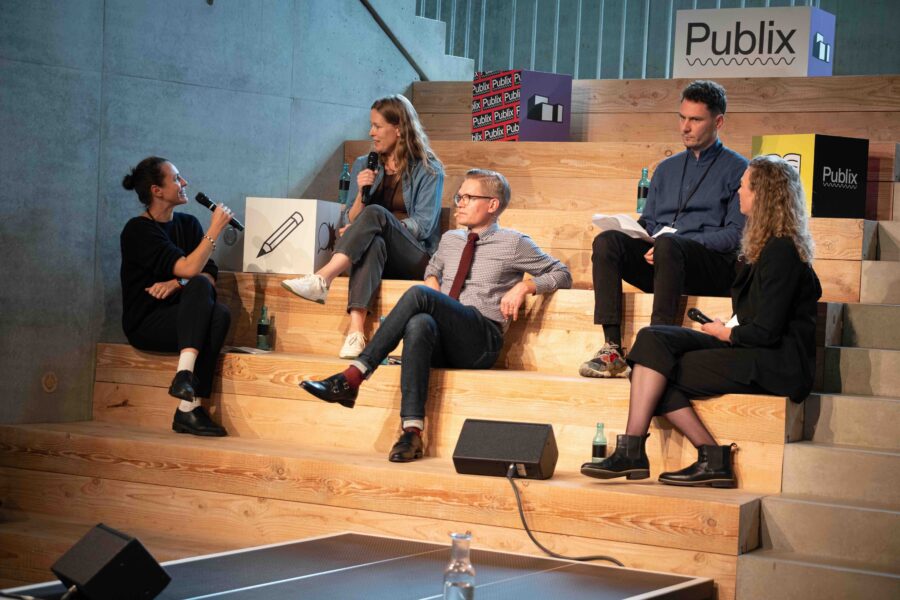
(Lightly edited transcript of my talk at the Publix opening conference September 12 2024 in Berlin, with links added to some of the underlying research. Picture by the organizers, with fellow panellists Maria Exner (Publix), Simon Jacoby (tsüri.ch), Lea Korsgaard (Zetland) and Katharina Binder (Media Forward Fund).)
I’ve been a migrant abroad most of my adult life but have always thought of myself as Danish, and in today’s world, it is a special privilege to be from a county one can, and can happily, return to.
I will continue to collaborate directly with colleagues at the Reuters Institute at the University of Oxford on projects on AI, the Digital News Report, and Leadership Development as a Senior Research Associate.
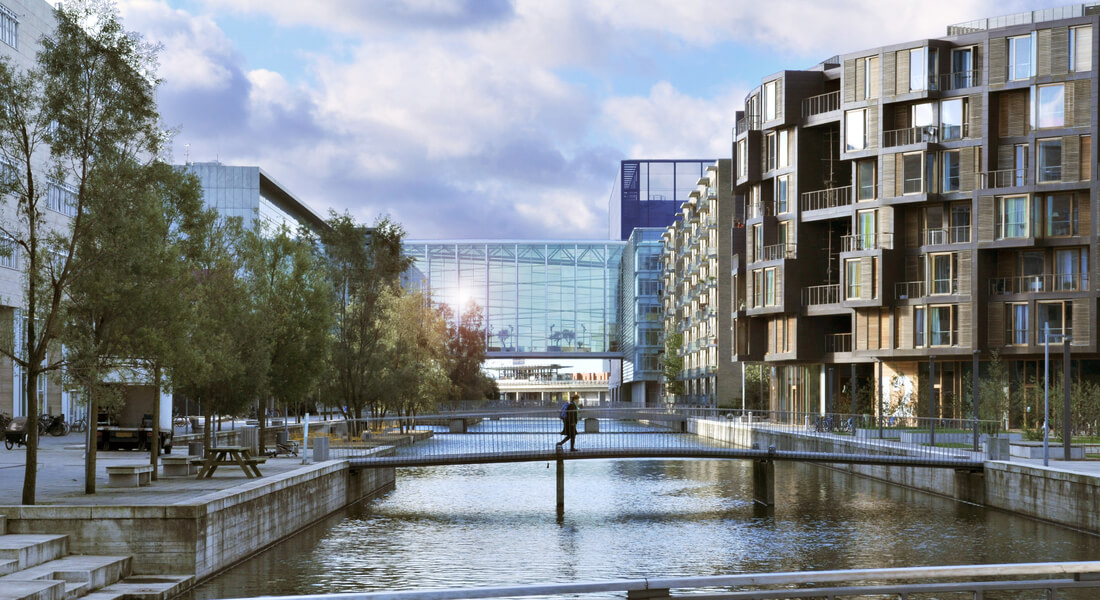
It is a privilege to join a strong multidisciplinary department at the University of Copenhagen with colleagues from communication, media studies, CS, and more, and to move to a world-class public university committed to basic research, solutions-oriented work, and life-long learning.
It has been an honour to serve the Reuters Institute community as Director. I know the Institute will go on to greater things with a strong team, a record of independent research, a diverse range of funders, and deep connections with journalists, editors, and researchers worldwide. I’m glad I’ll still be part of that journey even as I start a new one with a focus on working with new colleagues in Copenhagen.
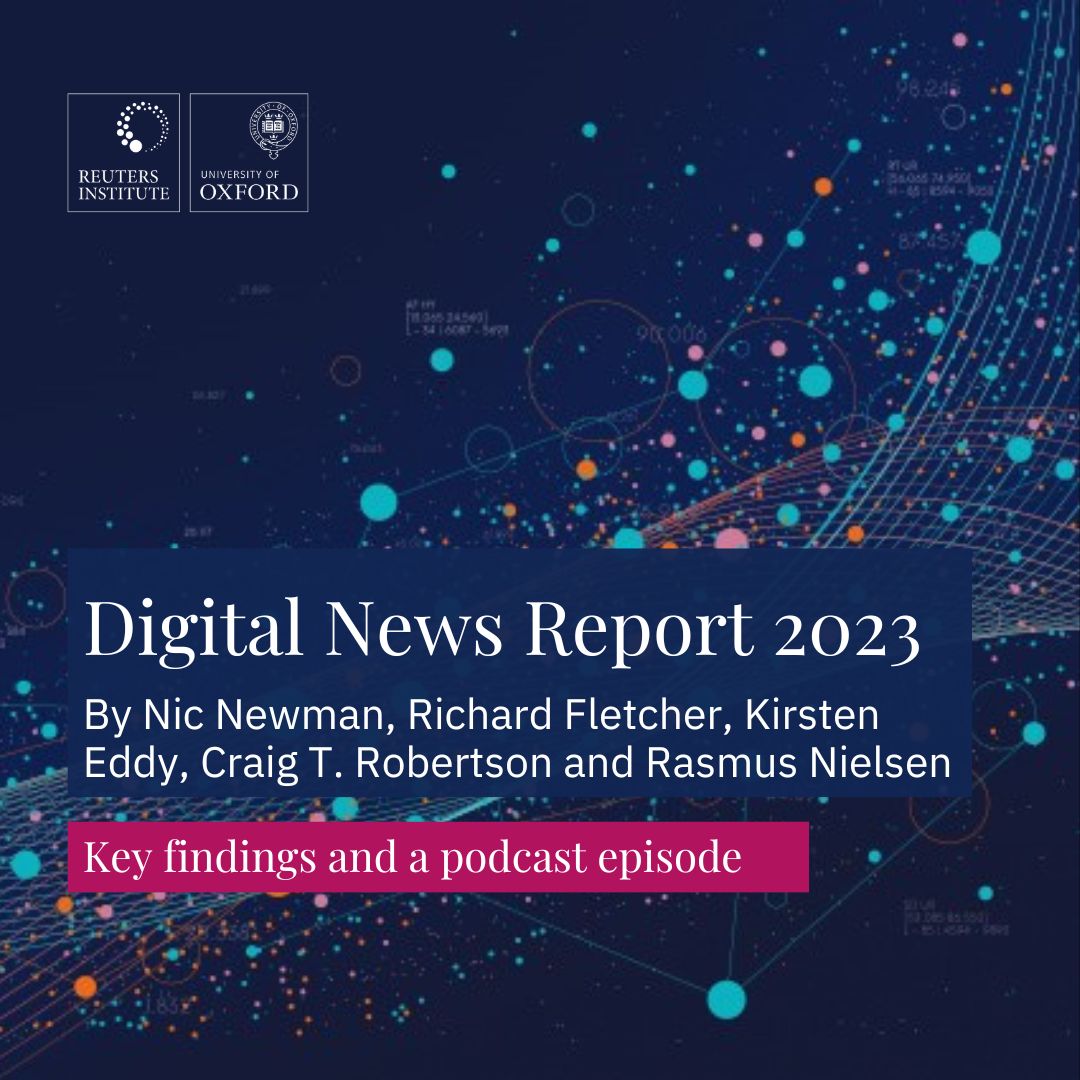
In a new Reuters Institute report, Richard Fletcher and I present an analysis of survey data from six countries.
Many of our respondents are optimistic that generative AI will make their personal lives better, views on whether it will make society better varies more, and when we look across different sectors, while people generally believe generative AI will have a large impact on almost every sector, many distrust that news media and (especially) social media companies will use generative AI responsibly.
This and more in the full report, which you can read here.
A privilege to host New York Times publisher A. G. Sulzberger, who gave the 2024 Reuters Memorial Lecture March 4. Among many favourite lines from his talk is this – “Journalistic independence demands a willingness to follow the facts, even when they lead you away from what you assumed would be true. A willingness to engage at once empathetically and sceptically with a wide variety of people and perspectives. An insistence on reflecting the world as it is, not as you wish it to be. A posture of curiosity rather than conviction, of humility rather than righteousness.”
And an honour to chair the subsequent panel discussion with him, Zaffar Abbas from Dawn, Melissa Bell former publisher of Vox, and Alessandra Galloni from Reuters, all of them people I deeply admire for their work and how they do it.
The social contract between journalism and much of the public is fraying – news use is declining, interest in news down, avoidance widespread. Based on survey data and especially well over a hundred interviews with consistent news avoiders, we look at why, and what it means when people live largely without news
We show that news avoidance is not “just” a response to the content on offer. It is also fundamentally shaped by who we are, what we believe, and the tools we rely on.
It happens at the intersection between identity, ideology, and infrastructures, and compound inequalities.
News avoiders, as we explain in the book, and this excerpt from it, tend to be younger, women, and from lower socioeconomic classes. Politics matters too, but this is less about whether people are left- or right-wing and more about the “other divide” between the connected and the disconnected.
In contrast to news lovers (and many regular users), news avoiders tended to see following news as an atomized, solitary activity – they are not embedded in any news communities encouraging regular use. They also often see news as being “not for people like them”, and more for elites.
News avoiders’ conviction that they cannot make a difference politically – and that news certainly will not help them do so – is the core of how they talk about their relationship with news. Whereas news lovers have a sense of political efficacy, news avoiders often do not.
We think avoidance is a problem for journalism, for society, and for people missing out.
But many news avoiders do not see their (distant) relationship to news as a problem. They do not see news as worthwhile, serving people like them, net good for society, let alone a duty.
Because news avoidance is only in part about content, the response cannot be more of the same.
Anyone who wants to respond to news avoidance need to meet people where they are.
“From news for the few and the powerful, to news for all the people.” That is how Juan González and Joseph Torres in their book describe the historical “grand arc of the American press.” That is not the direction of travel now. If anything it is going in the opposite direction.
Whether or not journalists and editors want to do this (in an already difficult and challenging situation) is their decision. For those who do want to address news avoidance, we present five ideas based on our research in the book and in this article.
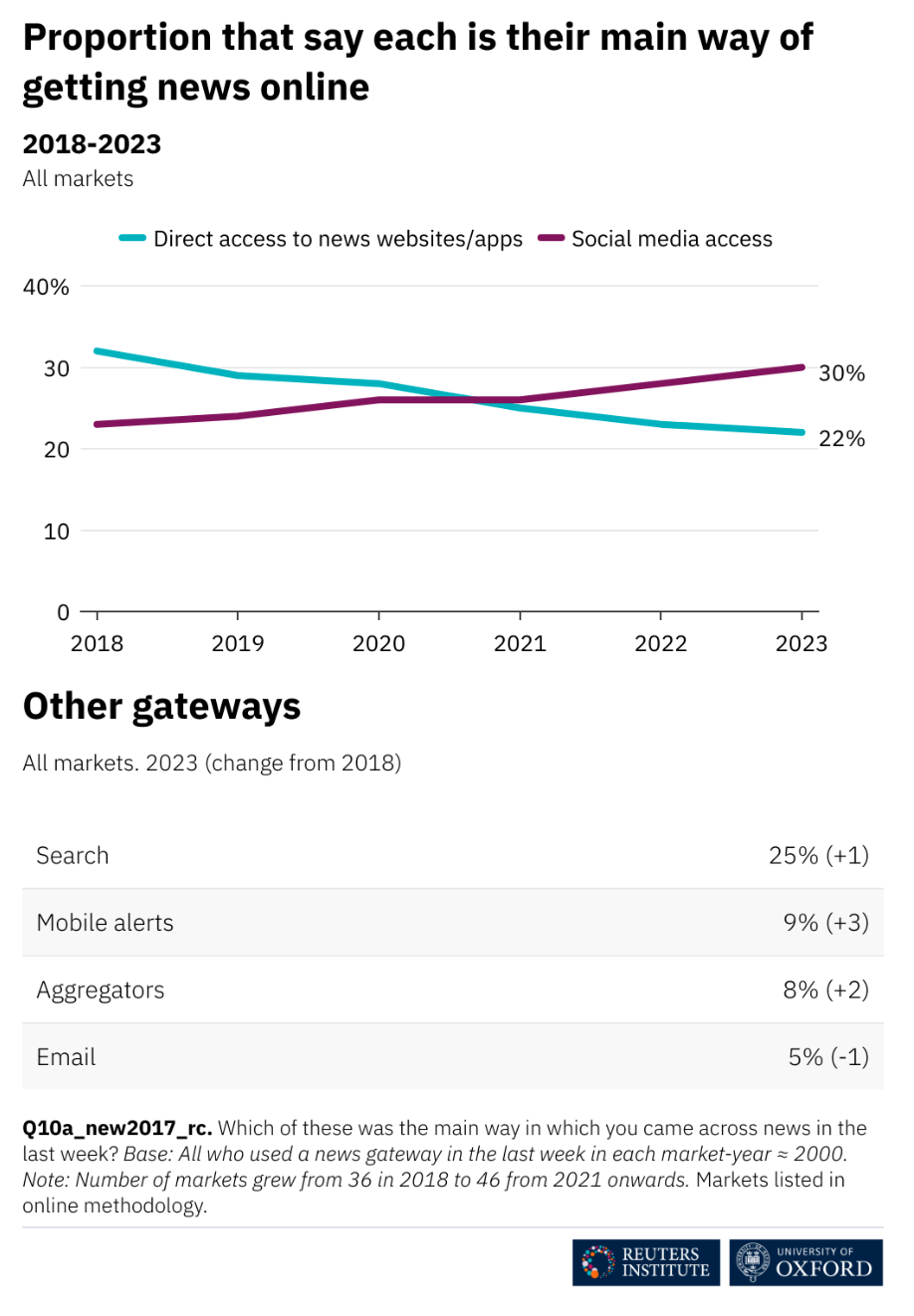
We document how many coming of age now eschew direct discovery for most brands, have little interest in conventional news offers oriented to older generations’ habits, interests, and values, instead embrace participatory, personable, personalised options offered via platforms.
This shift in media use is accompanied by ‘generalised scepticism’, not just low trust in news found via social and search (as we have shown before) but also concern over whether online news is real or fake (esp. among those who say they mainly use social media as source of news).
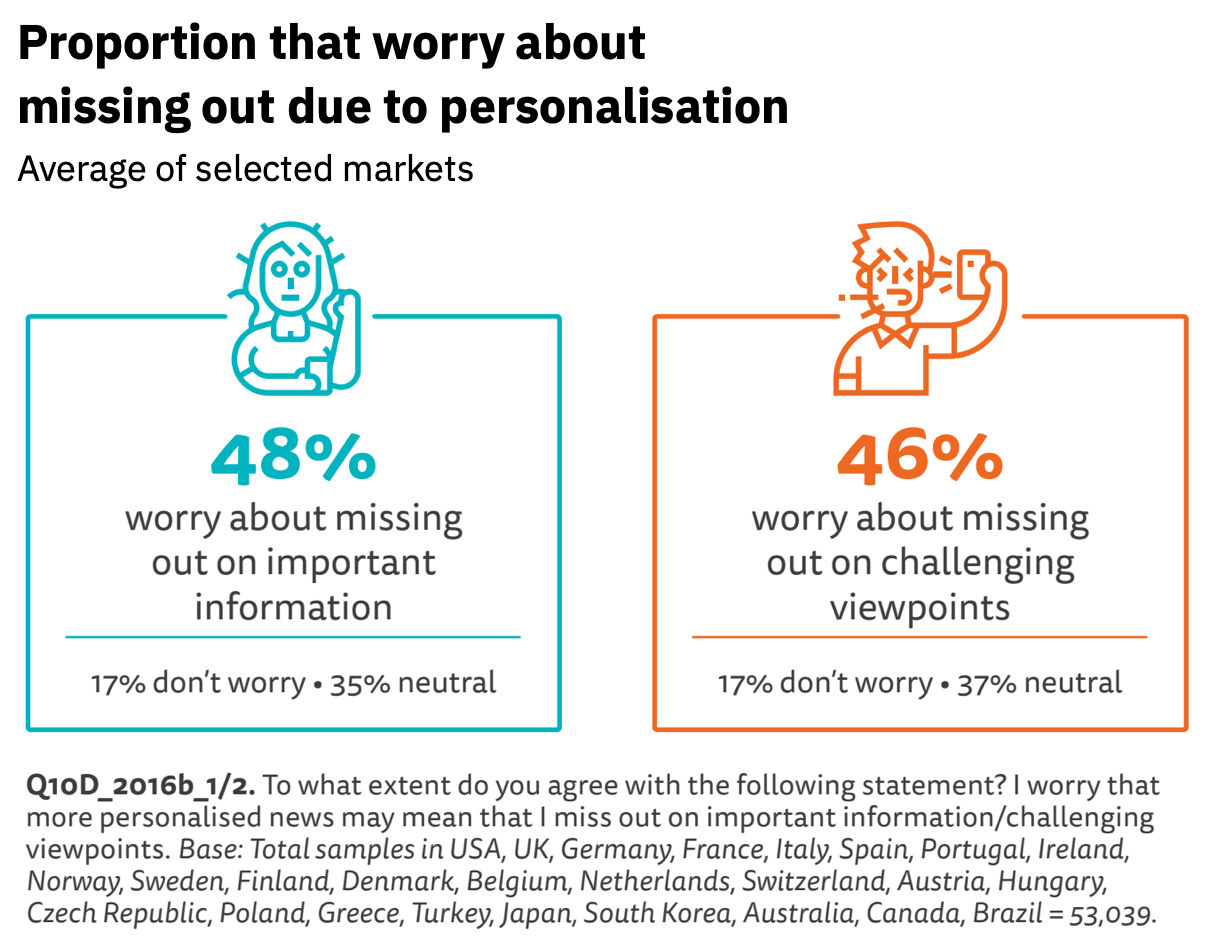
And there are other concerns around platforms and algorithms – across the countries where we asked, nearly half agree of respondents ‘worry that more personalised news may mean that I miss out on important information’ (48%) and ‘miss out on challenging viewpoints’ (46%).
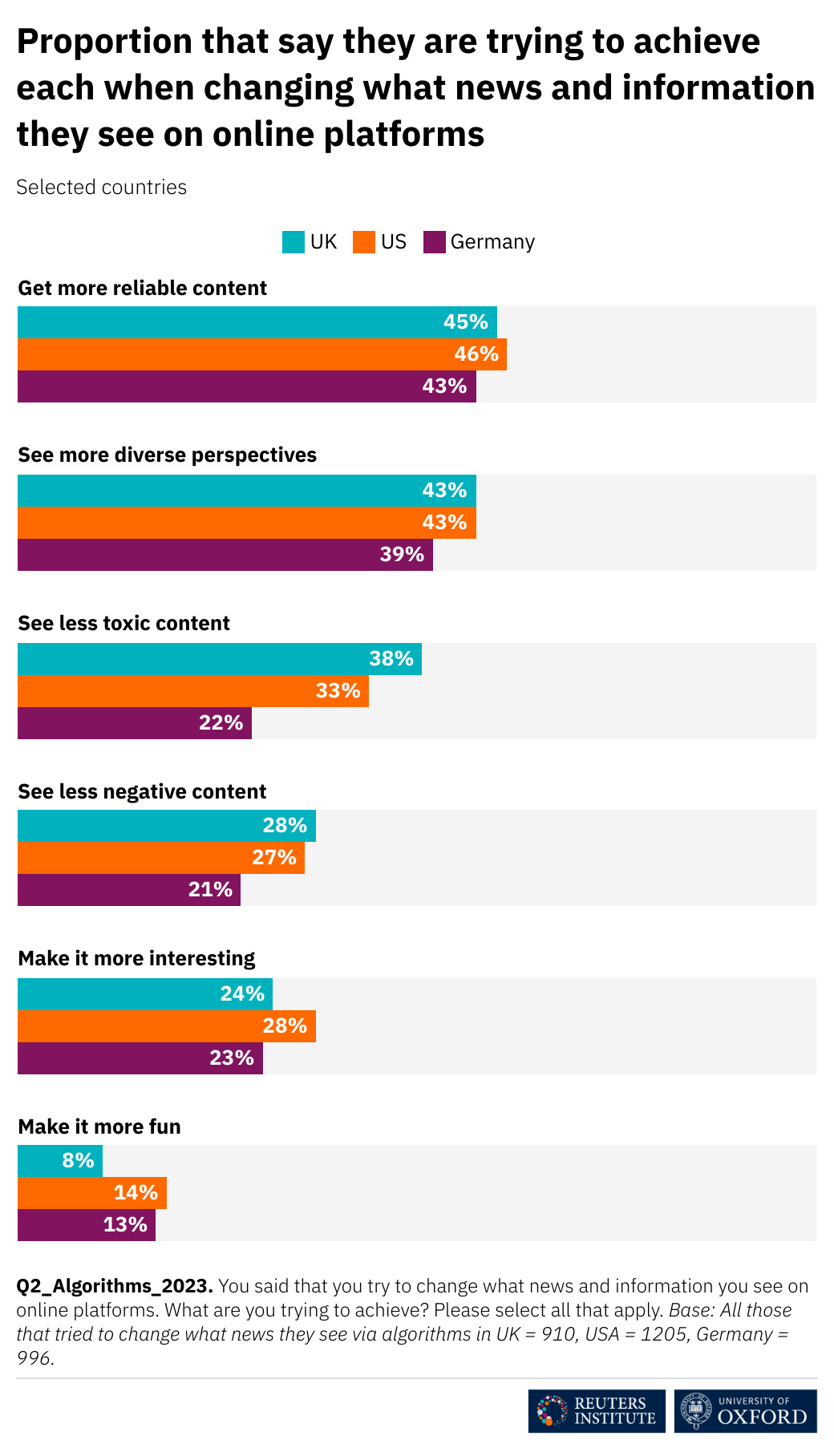
Active online participation with news is declining (offline too), and concerned about what they see on platforms, majority of respondents say they have tried to influence story selection in one or more ways (e.g. changing settings), with different objectives (and rarely more fun).
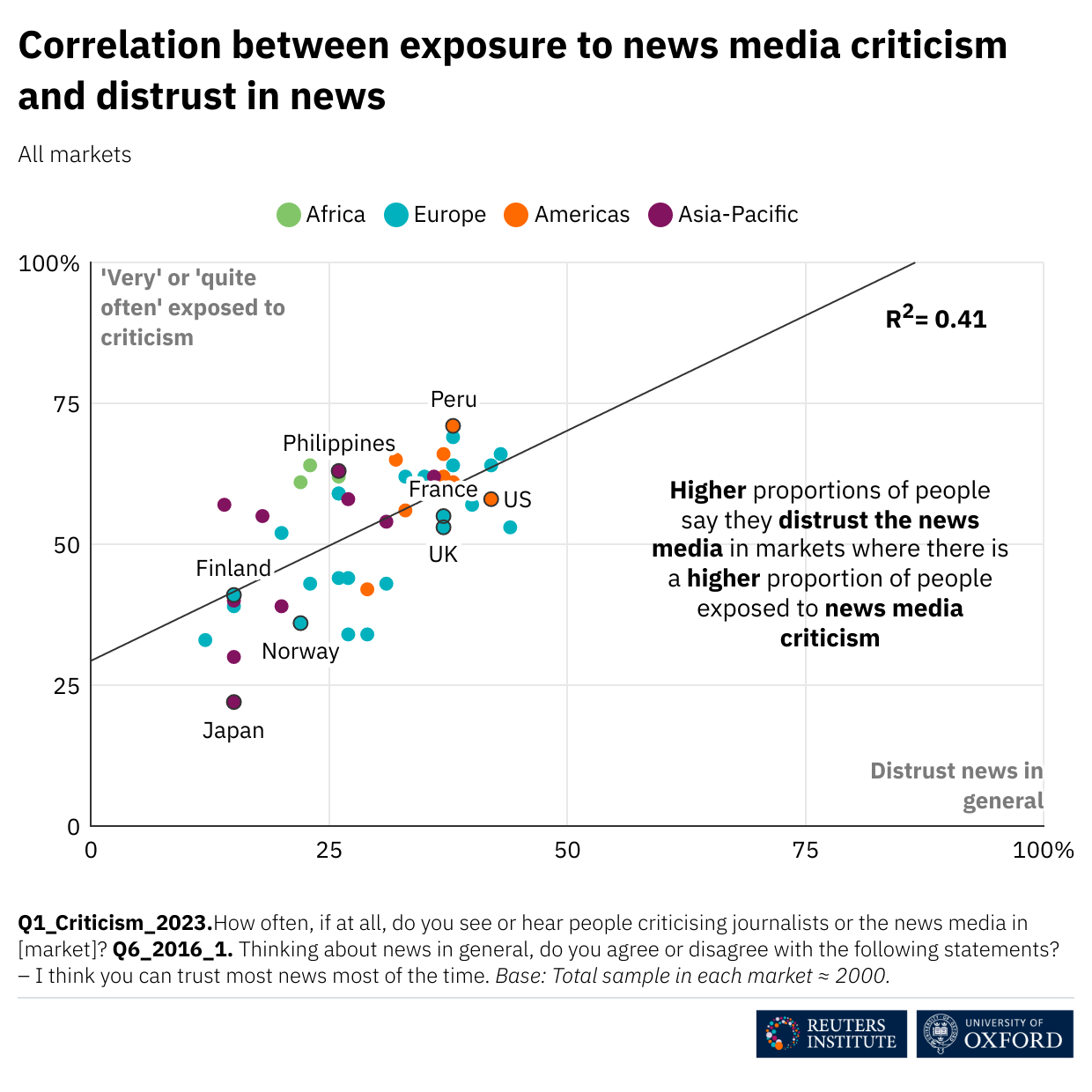
Social media platforms is also where respondents are most likely to say they come across people criticising journalists or the news media. These criticism are often driven by politicians, and looking across our dataset, we find a correlation between exposure to media criticism and low trust in news.
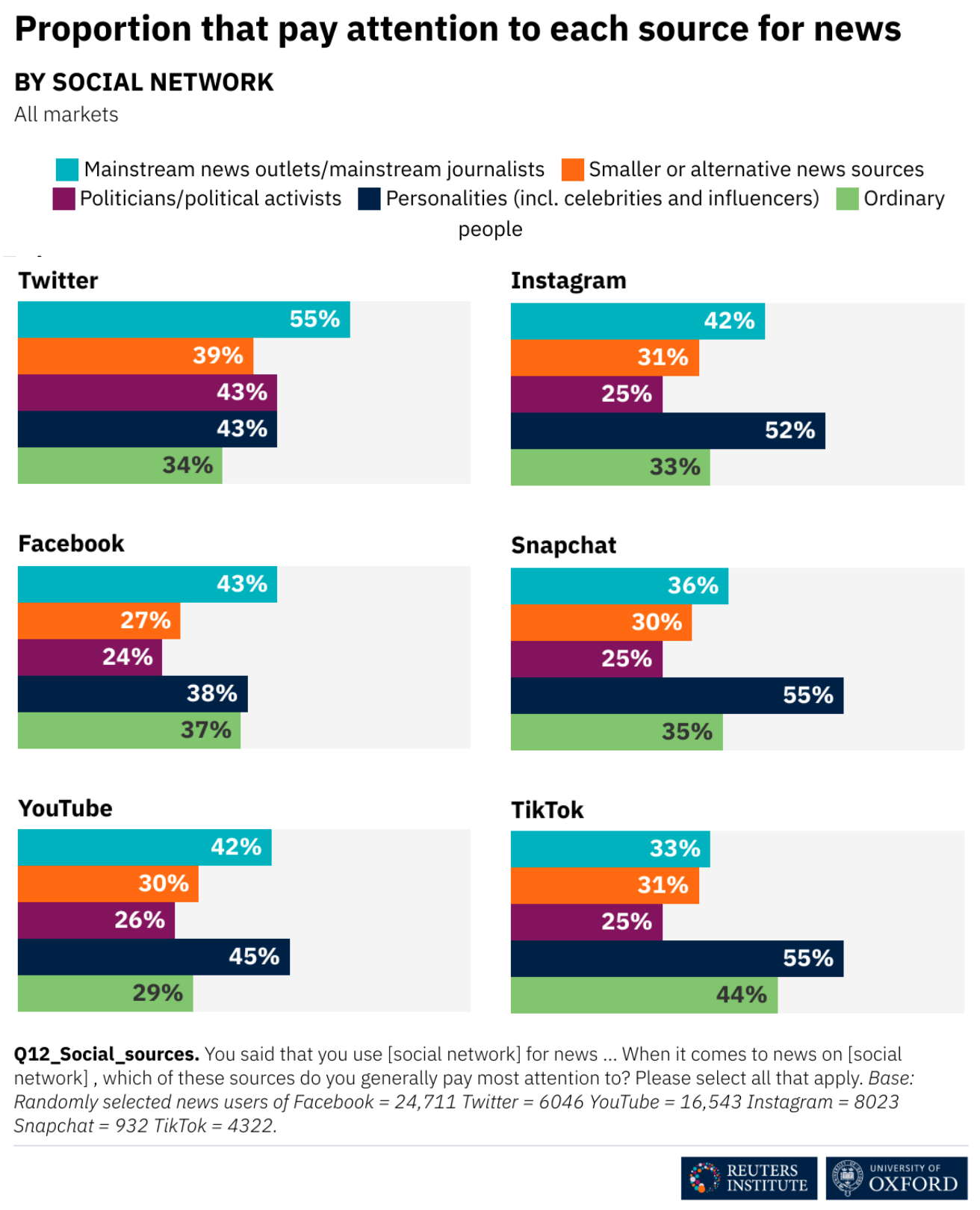
Despite reservations over misinformation, trust, algorithms, and more, the “new normal” is a world where people overwhelmingly, everywhere, opt for digital media in terms of their use – and are often not paying attention to mainstream outlets and journalists even when it comes to news.
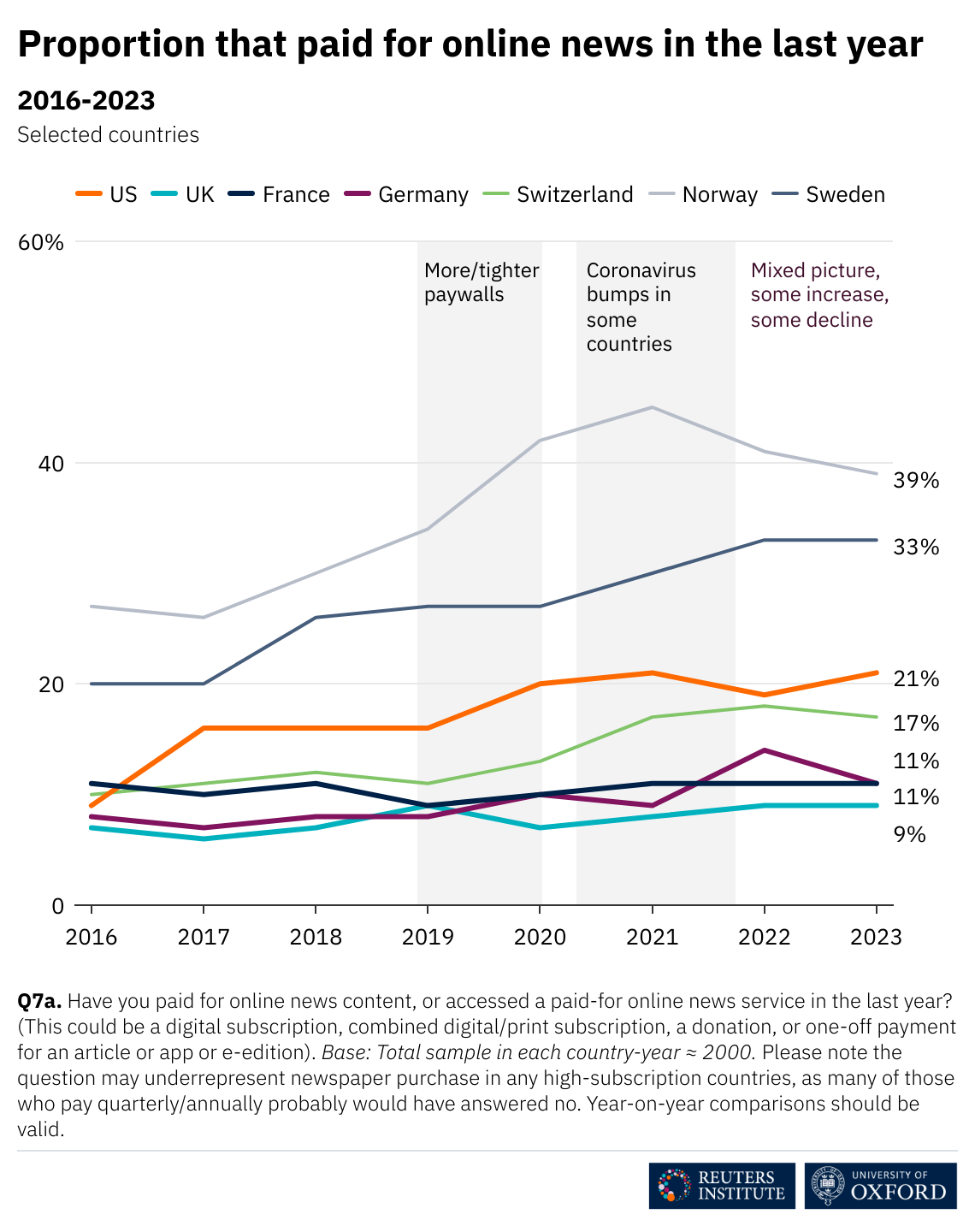
This is a super difficult environment for the business of news. On one side, various competing platforms are attracting most online advertising. On the other, many different subscription offers compete with news, and most news subscriptions go to a few winners, mostly upmarket national titles.
Report lead author is Nic Newman, working with Richard Fletcher, Kirsten Eddy, Craig Robertson and myself.
It is made possible by 18 sponsors, our amazing country partners, and the whole Reuters Institute team.
It’s a community effort, and I’m so happy to be part of this community.
We sometimes compare the multitude of intersecting challenges journalism faces to the global climate crisis. In the process of thinking about the climate crisis, I have come across the notion of fact-based hope, something I think applies to journalism too.
It’s about how we can be – and have evidence to be – resolutely hopeful even in the face of severe challenges.
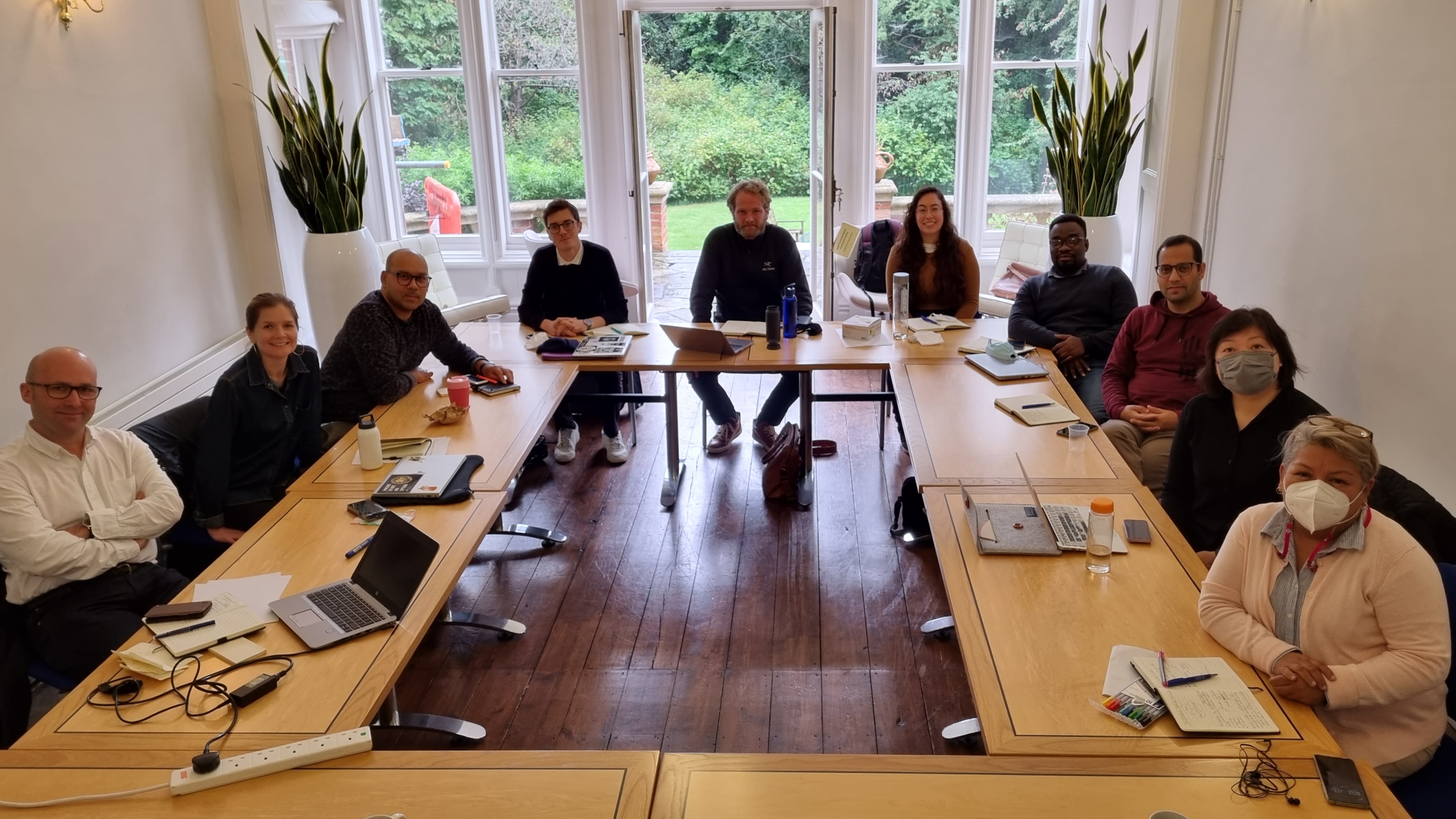
This post is about fact-based hope for journalism, and inspired by the amazing Reuters Institute journalist fellows we host, including the most recent cohort (pictured after a day full of evidence-based optimism!).
As with the climate crisis, anyone who hasn’t recognized the so-called “burning platform” in journalism is in denial.
Ignoring or actively distracting from the conflagration – created by the combination of analogue business models disrupted by audiences’ move to digital media and the rise of platforms, much more intense competition for attention and advertising in an high-choice online media environment, and the often fraying “public connection” between much of journalism and much of the public, in many countries compounded by powerful people who wage little less than a war on independent news media and those who seek truth and report it – is doing the profession, the industry, and the public a disservice. On closer inspection, there never really was a ‘golden age’, but in any case, there is no going back. Business as usual is suicidal.
* * *
But as with the climate crisis, we cannot and should not let the scale, scope, and complexity of the challenges ahead lead to paralysis, let alone resignation.
Fact-based hope is about how we might move beyond the crises we face.
So let’s be clear: there are both systemic, policy-level and more individual, organizational-level things we can do to create the different kinds of journalisms we want in the future.
The systemic things are largely political choices, up to citizens and the elected officials who represent them. We have many options based on evidence or at least with proof of concept, and while not cheap, uncontroversial, or without downsides, it is important to clearly state we can choose, as societies, to create a more enabling environment for the freedom, funding, and future that journalism needs. (I’ve written about that extensively here, here, here and elsewhere.)
But the more individual, organizational-level things are worth highlighting in parallel. Just as the climate crisis calls for both systemic and more granular responses, so too with the many challenges facing journalism. The need for systemic change does not mean we shouldn’t think about more individual and organizational-level change too.
That is especially important because large-scale systemic change for the better seems unlikely when it comes to journalism. There is no question policy can make a difference for the better (just as it very visible makes a difference for the worse in many countries when used for e.g. media capture). But will it? These are at best long-term responses, and in most countries face uncertain political prospects. As I’ve said before, I think we need to keep in mind that, realistically, most politicians around the world regard independent journalism at best with benign indifference, more often with rank hypocrisy, and very often with open hostility. Media policy, like all other forms of policy, is made by the politicians we have and will be used by those we get, it is not the exclusive province of the particular politicians each of us may personally prefer. We may hope that politicians will rally en masse to make a meaningful commitment to support journalism (despite the fact that there currently does not seem to be much public support for it). But I don’t think we have fact-based hope that they will.
So I am all for looking at evidence-based options for systemic change.
But, in parallel, I think we need to identify individual, organizational-level examples that can inspire fact-based hope.
* * *
And all around me, I see not just crises, but also evidence for fact-based hope.
The business of journalism second – it’s brutal out there, and few winners, many losers, but increasingly it seems the winners are not only some upmarket legacy titles but also some membership and subscription based digital born news media. After years of pretty unrelenting bad news, we are seeing some new investments in local news too, and some ad-supported popular titles at least in Europe have built huge online reach serving a far more diverse audience than often upper-crust-oriented subscription and membership-based titles. In addition to editorial collaborations, we are also seeing some publishers collaborate on the business side. And while limited and uneven, there is also a growing number of non-profit media and new ideas of how to support them. Finally, it’s also important to see that digitally-oriented titles often invest a far greater share of their revenues in journalism than legacy titles ever did – we can get more journalistic bang even if there may well be fewer bucks.
The public connection between journalism and the people it serves third – the coronavirus crisis has provided a reminder of the importance of trustworthy news. We have seen trust in news overall increase in many countries, we have seen some evidence more trusted brands seem to have grown their online reach more than others, research documents that news has helped people understand the crisis (just as it helps them understand politics). The way some journalists think about this connection is also evolving – with more emphasis on community engagement, a willingness to consider impact a measure of success, and a greater openness to using data to understand the audience. We are also seeing a greater recognition that unrelenting focus only on things that go wrong in the world (“negativity bias”) can turn people off the news, and an openness to think of constructive and solutions-oriented elements to journalism.
More than anything, across all four areas, I draw hope from how I see many journalists find one another in these discussions, whether in informal networks, professional associations, or unions, and face them with courage (insisting on the importance of change), curiosity (even if we don’t always know, in advance, exactly what we want), and community (we need to work together to get to where we need to be).
If we look at all these cases for fact-based hope and ask “will they work for all news media everywhere?”, the answer is clearly no. There is no single capital-S solution and no single capital-P problem.
But if we look at them and ask “will they work for some?” the answer is clearly, demonstrably, evidently “yes!” That provides the basis for hoping they can work for some others in some other places.
If we look at these examples and ask “will all journalists and all news media everywhere want to learn from these examples?” the answer is also clearly no.
Sometimes its because they may be a poor fit. That’s as it should be. Not everyone will want to walk the same paths.
Sometimes it is because, let’s be clear, some parts of journalism and some parts of the news media industry aren’t all that interested in changing. That’s in a way understandable, as long as we are clear-eyed that this is a choice, and that it too has consequences. In journalism as with the climate crisis, action and change can be difficult, but inaction has its own cost.
Sometimes some journalists and some in parts of the news industry want change, but some of their colleagues, perhaps their bosses, don’t want change, or disagree about the direction of change – as I’ve written before, we need to face up to the fact that this is sometimes about power and self-interest as much as about different ideals or hopes for the future.
But we clearly can change, even in the face of the many, serious challenges journalism faces – there are inspiring real-world examples all around us, and I’m so inspired by how the fellows we host in Oxford engage with them, from Adele’s work on collaboration and climate coverage, to Peter’s work on business models to protect editorial independence, to Zoe’s work on diversity, to Ramisha’s work on how journalists can learn from one another and many more.
I think fact-based hope points to many different paths ahead, and I think it provides an antidote to resignation, a position between the equally misleading extremes of facile pessimism and facile optimism. Fact-based hope is not about denying the multiple crises journalism faces. It is about responding to them.
Let me end with a quote from Varshini Prakash, co-founder and executive director of the Sunrise Movement organizing to fight the climate crisis in the United States.
“The biggest mistake we all make”, she says, “is in trying to jam hope down each other’s throats without giving the space and time for us to feel the full embodied response of what is happening.”
“Hope honestly comes from the action that I both see myself and those around me taking on a daily basis.”
“Hope”, she says, “lies in action.”
Prakash is not oblivious to the (climate) challenges we face. But she knows that hope is a necessary part of facing them.
I think that goes for journalism too. And I think we have evidence to support fact-based hope.





 rasmuskleisnielsen.net